Hello there…
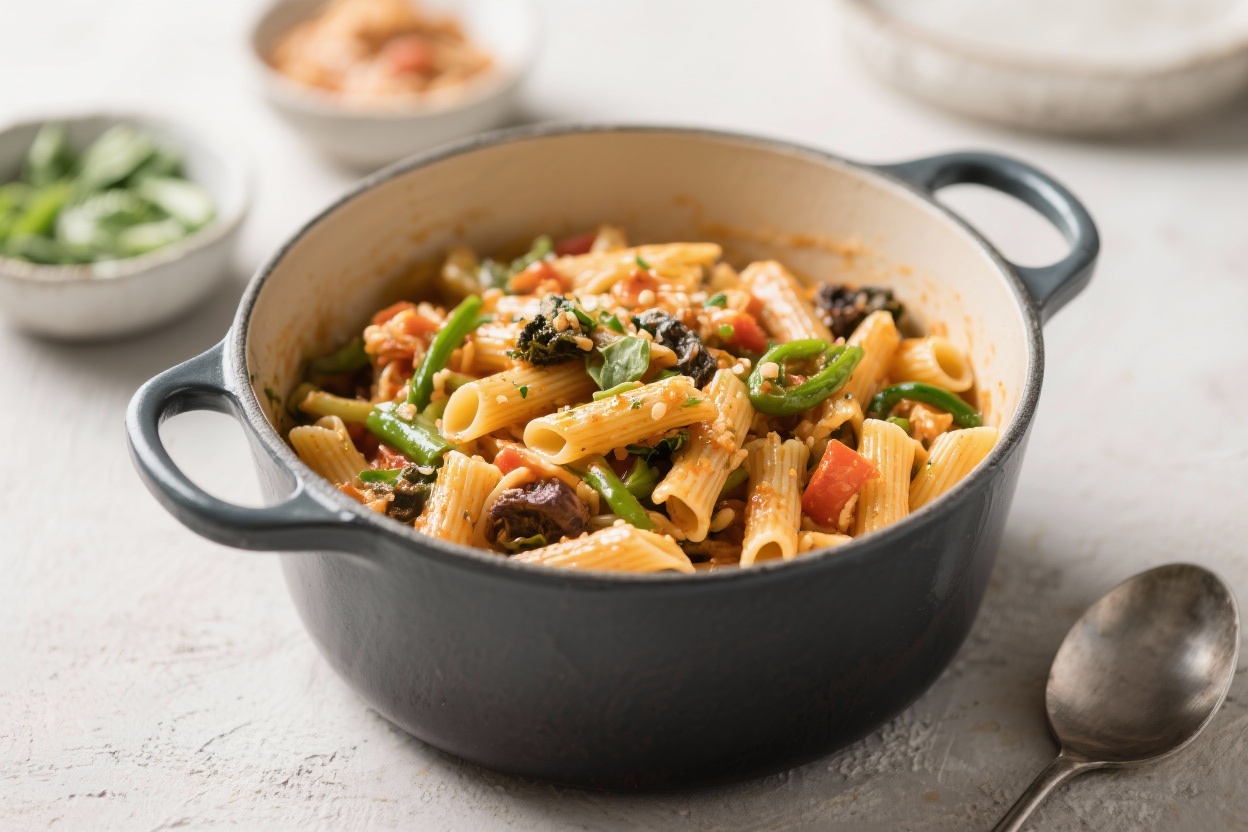
You know busy nights call for dinner that practically cooks itself, and this Vegan One Pot Pasta is exactly that.
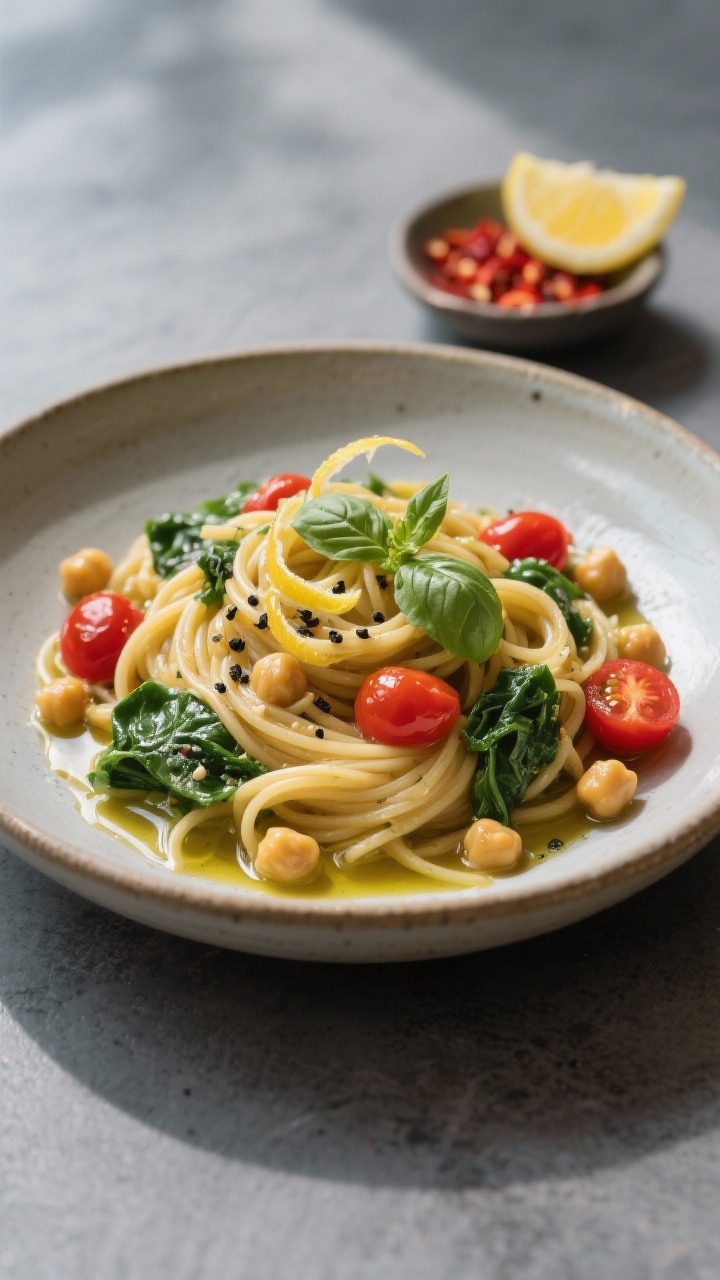
Everything goes into one pot, pasta, veggies, seasonings and water and comes out creamy, comforting and full of flavor.
No straining, no juggling multiple pans, and barely any cleanup.
It’s the kind of meal you’ll want in your weekly rotation.
Plus, it’s budget-friendly and a great way to use up what’s in the fridge.
Table of Contents
Why This Vegan One-Pot Pasta Recipe Works
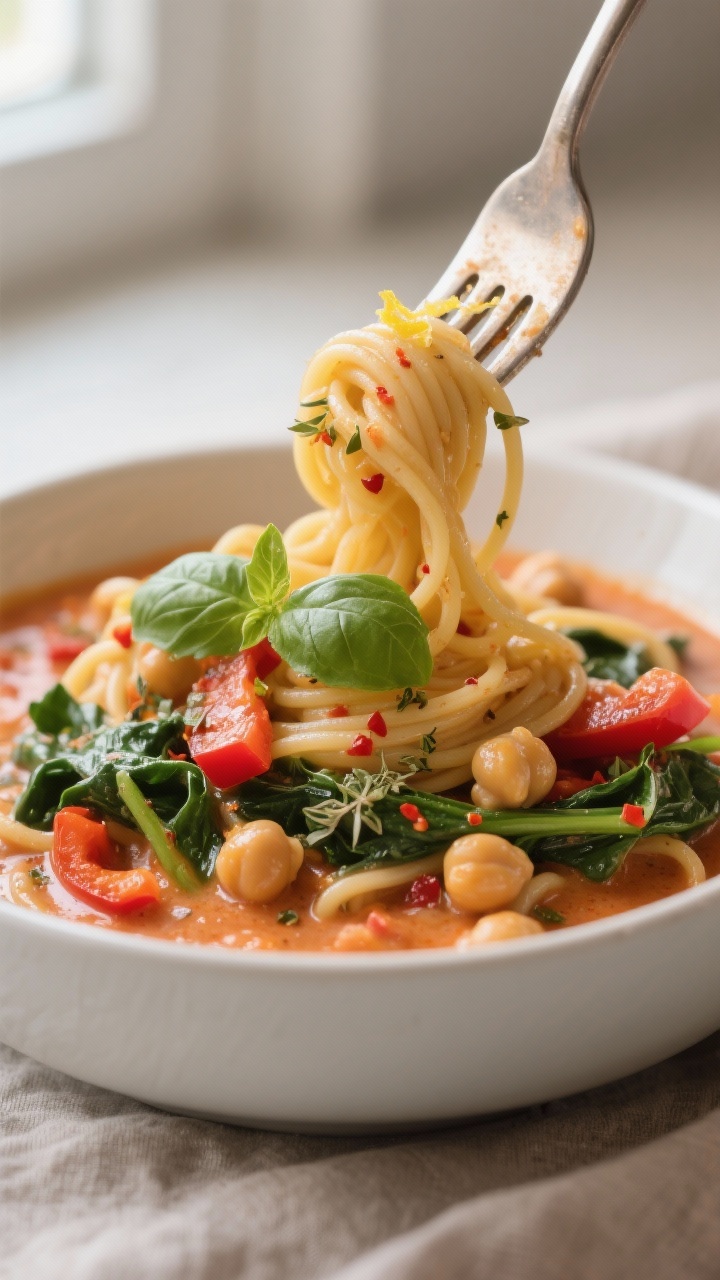
- Starch equals sauce: Cooking pasta directly in the pot releases starch that thickens the liquid, creating a silky sauce without cream.
- Balanced flavors: Aromatics, tomatoes, and herbs build depth while a splash of lemon and a drizzle of olive oil brighten the finish.
- Flexible and forgiving: Use whatever vegetables you have on hand, and choose any short or long pasta you like.
- Minimal cleanup: One pot from start to finish saves time and effort—perfect for weeknights.
- Nutrient-forward: Veggies and legumes add fiber, protein, and color, making the dish hearty and wholesome.

Vegan One-Pot Pasta
Ingredients
Method
Prep ingredients
Slice onion, mince garlic, halve tomatoes, and slice bell pepper. Drain beans if using.Add everything to pot
In a large pot, add pasta, onion, garlic, tomatoes, bell pepper, chickpeas, oregano, basil, red pepper flakes, bay leaf, and nutritional yeast.Add liquid
Pour in vegetable broth until pasta is just submerged.Cook the pasta
Bring to a boil over medium-high heat. Stir well, then reduce heat to medium. Cook uncovered for 9–12 minutes, stirring every 1–2 minutes.Add spinach
Add spinach in the last 2 minutes of cooking and stir until wilted.Finish and serve
Remove from heat. Stir in lemon juice and olive oil. Season with salt and pepper. Remove bay leaf, garnish, and serve hot.
Notes
- Stir often. If you ignore it, pasta sticks and clumps pretty quickly. Learned that the annoying way.
- Don’t panic if it looks watery at first. The starch thickens everything as it cooks.
- If it dries out early, just add a splash of hot water or broth. No need to overthink it.
- Taste at the end. This step fixes most flavor issues instantly. Adjust salt, lemon, or seasoning as needed.
Storage Instructions
- Fridge: Store leftovers in an airtight container for up to 4 days. Add a splash of water or broth before reheating.
- Reheat: Warm gently on the stovetop over low heat or in the microwave in 45-second intervals, stirring between bursts.
- Freezer: Not ideal, as cooked pasta can turn mushy once thawed. If you must freeze, undercook the pasta slightly and freeze for up to 1 month.
Why This is Good for You
- Fiber-rich: Whole-grain pasta, beans, and vegetables support digestion and help keep you full.
- Plant protein: Chickpeas or white beans add a steady, satisfying protein boost without heaviness.
- Micronutrient-dense: Leafy greens, tomatoes, and peppers deliver vitamins A, C, K, and potassium.
- Healthy fats: Olive oil provides monounsaturated fats that support heart health.
- Lower in sodium: Using low-sodium broth lets you control the salt level.
Pitfalls to Watch Out For
- Too much liquid: If the sauce isn’t thickening by the time the pasta is nearly done, simmer a few extra minutes or cook uncovered to reduce.
- Not enough liquid: If the pot looks dry before the pasta is al dente, add hot water or broth 1/4 cup at a time and keep stirring.
- Sticking and clumping: Stir frequently, especially in the first few minutes and after adding greens.
- Overcooking: Pull the pot off the heat when the pasta is al dente.It will continue to soften as it rests.
- Underseasoning: Taste at the end. Add salt, pepper, lemon, or more nutritional yeast to round out the flavor.
Recipe Variations
- Creamy tomato: Stir in 1/3 cup unsweetened cashew cream or canned coconut milk at the end for extra richness.
- Mushroom and thyme: Swap bell pepper for 8 oz sliced mushrooms. Use thyme instead of basil and oregano.
- Olive and caper: Add 1/3 cup sliced olives and 1–2 tbsp capers for a briny, puttanesca-style twist.
- Green boost: Add zucchini ribbons or frozen peas in the last 3 minutes of cooking.
- Spicy harissa: Stir in 1–2 tsp harissa paste or chili crisp for heat and depth.
- Gluten-free: Use gluten-free pasta and reduce liquid by about 1/4 cup.Watch closely, as GF pasta cooks faster and breaks down more easily.
- High-protein: Use red lentil or chickpea pasta and keep a closer eye on texture to avoid overcooking.
FAQ
Can I use canned tomatoes instead of fresh?
Yes. Use 1 cup canned diced tomatoes with their juices and reduce the broth by about 1/4 to 1/2 cup to keep the sauce from getting too thin.
What kind of pasta works best?
Most shapes work well. Spaghetti, linguine, penne, and fusilli are reliable.
If using very thick shapes or large shells, add a bit more liquid and extend cooking time by 1–2 minutes.
How do I make it cheesier without dairy?
Add an extra tablespoon of nutritional yeast, a spoonful of white miso for umami, or a dollop of vegan cream cheese at the end for creaminess.
Can I add frozen vegetables?
Absolutely. Add them in the last 5 minutes of cooking. Peas, spinach, broccoli florets, and mixed vegetables all work well.
How can I prevent the pasta from clumping?
Use a wide pot, keep ingredients spread out, and stir frequently, especially in the first few minutes.
A small drizzle of olive oil at the start also helps.
My sauce is too thin—what now?
Simmer uncovered for a few extra minutes, stirring often, until it reduces. If it’s still thin, mash a few beans into the sauce to thicken.
Is this good for meal prep?
Yes. It reheats well for several days.
For the best texture, cook the pasta just to al dente and reheat with a splash of water or broth.
Final Thoughts
This Vegan One-Pot Pasta brings comfort, speed, and flavor together in one easy pot.
It’s flexible enough for whatever you have on hand and reliable enough for busy nights.
Keep the method the same, swap the veggies and seasonings, and you’ll have countless variations without extra effort.
Simple, wholesome, and satisfying—this is the kind of recipe that earns a permanent spot in your kitchen routine.
Hello, I’m an athlete and a food lover who shares vegetarian recipes that are both delicious and nourishing. I enjoy creating salads, pastas, smoothies, and guilt-free desserts you can enjoy without stressing about calories.