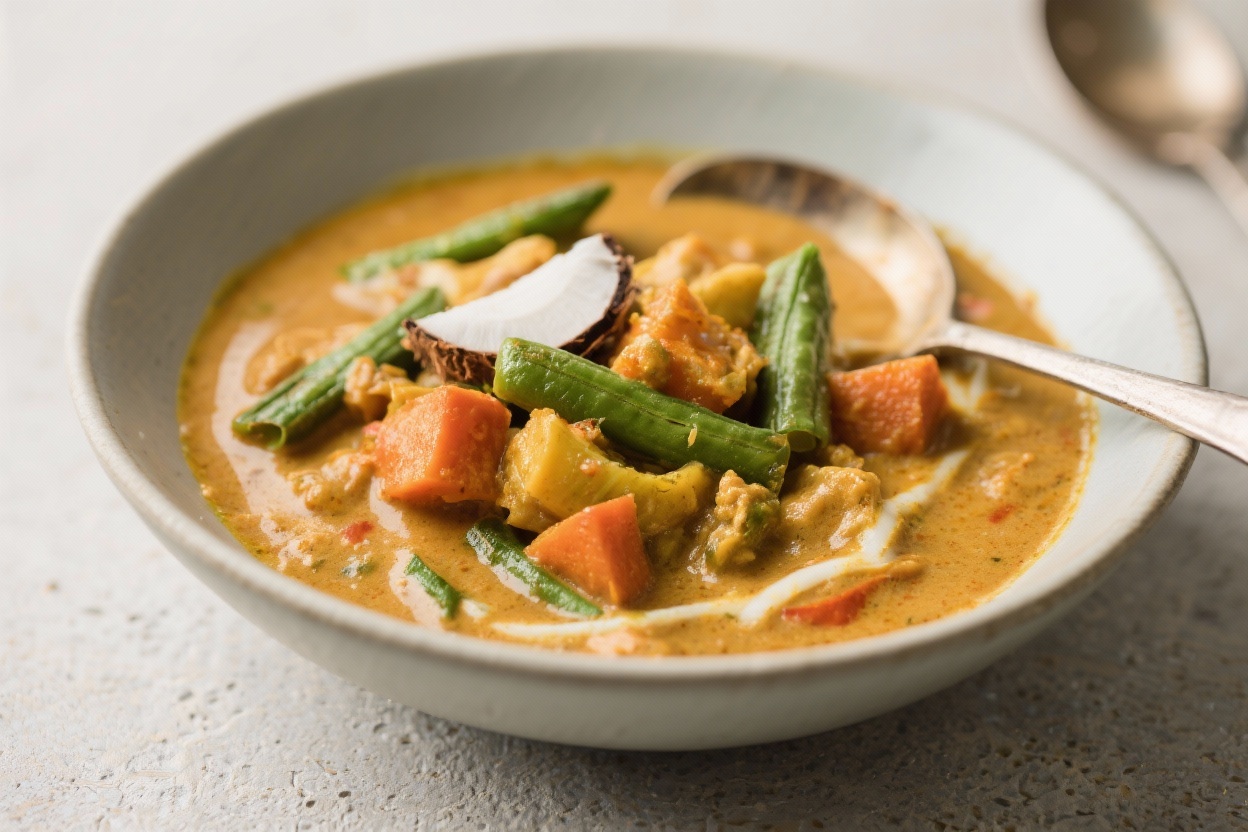
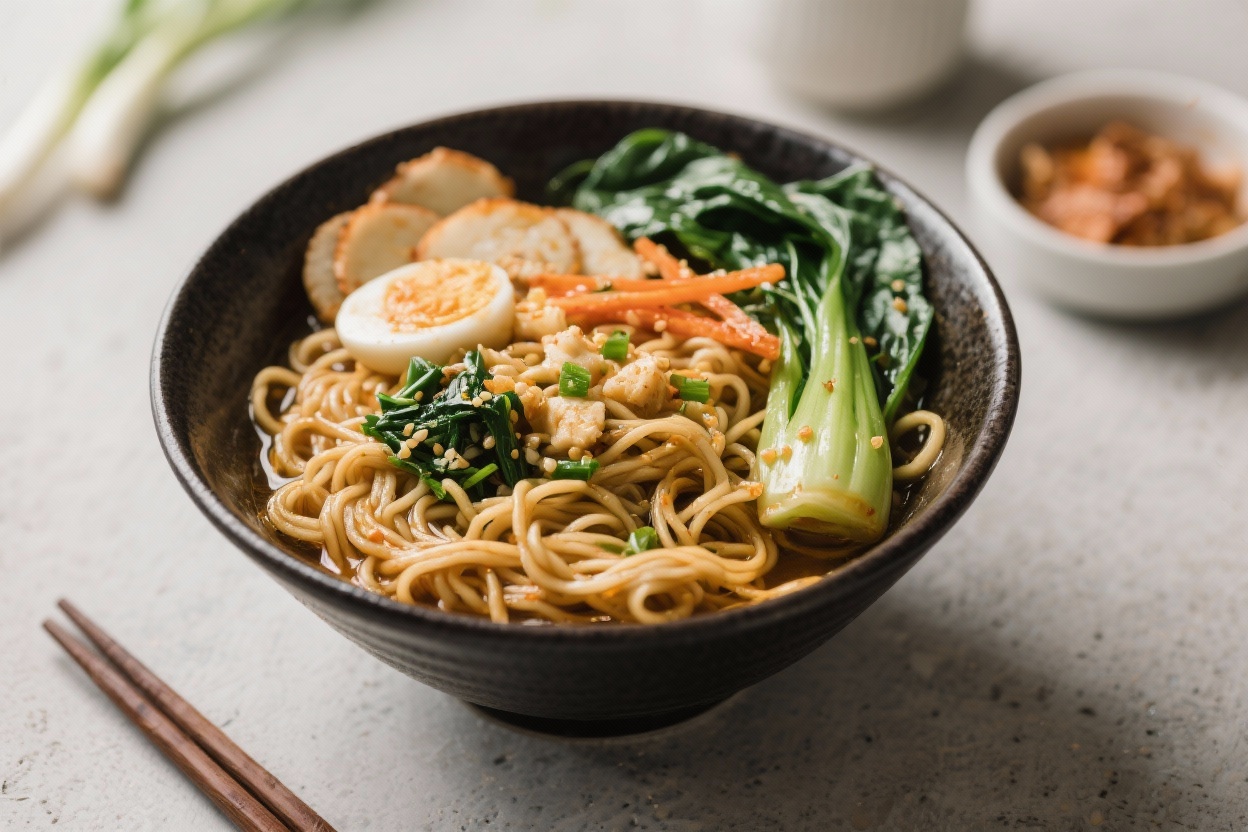
Hello there…
Ramen doesn’t need meat or dairy to taste rich and satisfying.
This vegan version leans on deeply savory ingredients, springy noodles, and a little heat to make a bowl that feels like a hug.
It’s weeknight-friendly, customizable, and perfect for using up veggies.
You’ll get a broth that’s bold and layered, a tangle of noodles with bite, and toppings that add crunch and freshness.
Make it once and you’ll keep this recipe on repeat.
Table of Contents
Why This Vegan Ramen Noodles Recipe Works
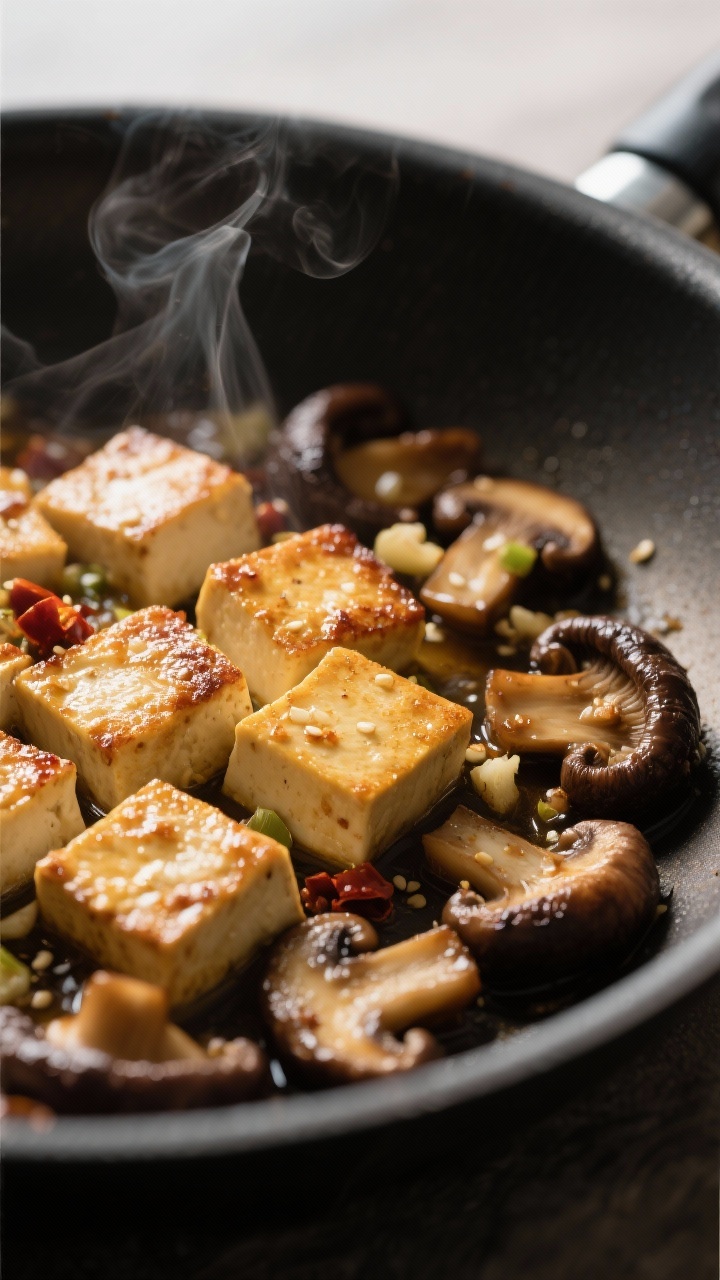
This recipe builds flavor from the ground up. Aromatics like garlic, ginger, and scallions brown in the pot to create a savory base.
Then miso, soy sauce, and toasted sesame oil step in to add umami and depth—no animal products needed.
Roasted mushrooms and a dash of chili paste bring that restaurant-style richness.
A splash of rice vinegar brightens the broth so it doesn’t taste flat.
The result is a balanced bowl with salty, sweet, spicy, and tangy notes, all playing well together.
Keeping It Fresh
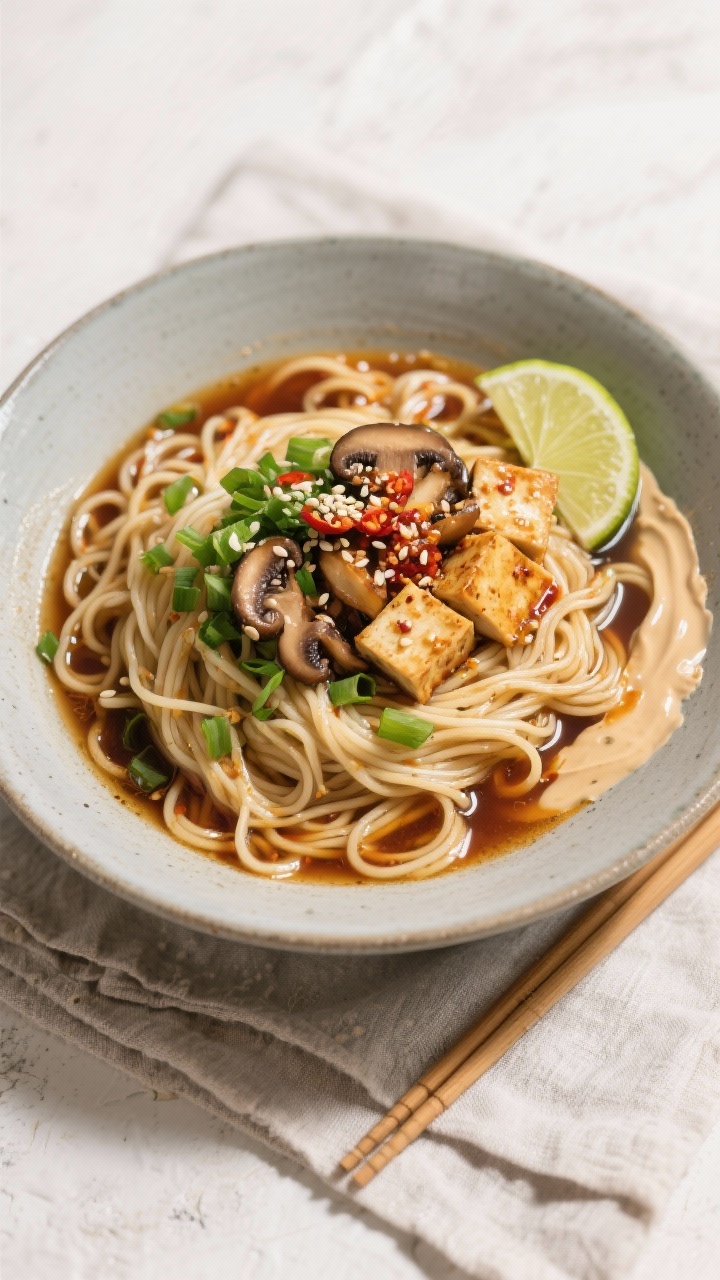
Store the broth and noodles separately. Noodles soak up liquid and can turn mushy if left in the broth. Keep each in airtight containers in the fridge for up to 3 days.
Reheat the broth to a gentle simmer, then add noodles just before serving.
Tofu keeps best if stored separately and reheated in a skillet to revive its crisp edges.
Freeze only the broth (without noodles or greens) for up to 2 months.
Health Benefits
This bowl packs a lot of nutrition without feeling “healthy” in a boring way.
Miso and soy sauce bring fermented goodness and big flavor, helping reduce the need for excess oil. Tofu adds plant-based protein and iron.
Leafy greens deliver vitamins A, C, and K, while mushrooms contribute B vitamins and minerals.
Using low-sodium broth and tamari lets you control salt. Add whole-grain noodles for extra fiber and steadier energy.
Vegan Ramen Noodles
Ingredients
Method
Prepare the tofu
Press tofu for 15 minutes. Cube and pat dry. Toss with a little soy sauce and oil. Pan-sear until golden and crisp. Set aside.Cook the mushrooms
Heat oil in a large pot. Add mushrooms with a pinch of salt. Cook until browned. Remove half for topping.Build aromatics
Add garlic, ginger, and scallion whites to the pot. Cook briefly until fragrant.Make the broth
Add vegetable broth, soy sauce, maple syrup, and chili paste. Bring to a gentle simmer and cook for 8–10 minutes.Add vegetables
Stir in spinach, carrots, and corn. Cook for 2–3 minutes until just tender.Cook noodles separately
Boil noodles according to package instructions. Drain and rinse lightly. Do not overcook.Finish the broth
Turn heat to low. Mix miso with a little hot broth, then stir into the pot. Add sesame oil and rice vinegar. Adjust seasoning.Assemble
Divide noodles into bowls. Pour hot broth over. Add tofu and mushrooms. Top with scallions, sesame seeds, and extras.Serve
Serve hot with a squeeze of lime if desired.
Notes
- Don’t boil the miso. I did that once, and the flavor just felt off. Always mix it in at low heat.
- Cook noodles separately. If you throw them into the broth, they soak everything up and turn soft fast.
- Brown the mushrooms properly. That’s where a lot of the flavor comes from, so don’t rush it.
- Taste before serving. Small tweaks with soy sauce, vinegar, or chili paste make a big difference.
What Not to Do
- Don’t boil miso. High heat can dull its flavor and beneficial properties.Stir it in off the heat or at a very low simmer.
- Don’t overcook noodles. Mushy noodles ruin texture. Cook them separately and add at the end.
- Don’t skip acid. Without vinegar or lime, the broth can taste heavy. A touch of brightness balances everything.
- Don’t crowd the mushrooms. They’ll steam instead of brown.Cook in batches if needed for maximum flavor.
- Don’t rely on one note. Balance salt, sweet, heat, and umami. Taste as you go and adjust.
Variations You Can Try
- Creamy Tan-Tan Style: Whisk in 1–2 tbsp tahini and a dash of chili oil for a nutty, silky broth.
- Shoyu-Inspired: Go lighter on miso and heavier on soy sauce, with a clear, aromatic broth.
- Curry Ramen: Add 1–2 tsp curry powder and a splash of coconut milk for warmth and creaminess.
- Kimchi Ramen: Stir in chopped vegan kimchi and a spoonful of kimchi brine for tang and heat.
- Veggie Swap: Use broccoli florets, snap peas, or roasted sweet potato. Keep textures varied for interest.
- Protein Options: Try marinated tempeh, edamame, or soy curls for a change from tofu.
- Gluten-Free: Use rice ramen or millet-brown rice noodles and tamari instead of soy sauce.
FAQ
Can I make the broth ahead of time?
Yes.
The broth actually tastes better the next day. Keep it separate from noodles and greens, then reheat and add fresh veg for the best texture.
What kind of miso should I use?
White or yellow miso works best for a balanced, slightly sweet flavor. Red miso is stronger and saltier; use less if you go that route.
Is there a soy-free option?
Use chickpea miso and coconut aminos instead of soy sauce.
Swap tofu for chickpeas or marinated mushrooms for protein and heft.
How do I get restaurant-style richness without animal fat?
Brown the mushrooms well, add a small spoon of tahini or peanut butter, and finish with toasted sesame oil. Those choices build body and depth.
Can I use instant ramen noodles?
Yes, just discard the seasoning packet. Cook the noodles briefly and add them to your homemade broth so you control the flavor and salt.
Why is my broth bland?
It likely needs salt, acid, or heat.
Add a splash of soy or tamari, a bit more rice vinegar or lime, and a touch of chili paste. A pinch of sugar can also round edges.
How spicy should I make it?
Spice is personal. Start with 1 tsp chili paste and build up.
You can always add chili oil at the table for customizable heat.
Can I air-fry the tofu?
Absolutely. Toss cubes with 1 tsp oil and 1 tsp soy sauce, then air-fry at 400°F (200°C) for 12–15 minutes, shaking halfway, until crisp.
In Conclusion
Vegan ramen noodles are proof that comfort food can be bold, nourishing, and easy to put together.
With a smart mix of aromatics, umami boosters, and fresh toppings, you’ll have a bowl that hits every craving.
Keep the noodles separate, taste and tweak as you go, and don’t forget a squeeze of lime at the end.
This is the kind of weeknight meal that feels special without the stress.

Hi, I’m Pratiksh! I run SnacknStretch where I share simple, tasty recipes anyone can make at home. I enjoy experimenting with fresh ingredients and turning everyday meals into something a little more exciting. If you like easy recipes, seasonal flavors, and food that actually tastes good, you’re in the right place.