
This Classic Vegetarian Lasagna is the kind of comfort food that makes everyone at the table happy.
It layers tender noodles with a bright tomato sauce, plenty of vegetables, and a creamy ricotta filling that bakes into something golden and irresistible.
The flavors are familiar but fresh, with just enough garlic and herbs to make the whole dish sing.
It’s hearty without being heavy, and it reheats beautifully.
Whether you’re feeding a crowd or planning meals for the week, this lasagna has your back.
Table of Contents
Why This Vegetarian Lasagna Recipe Works
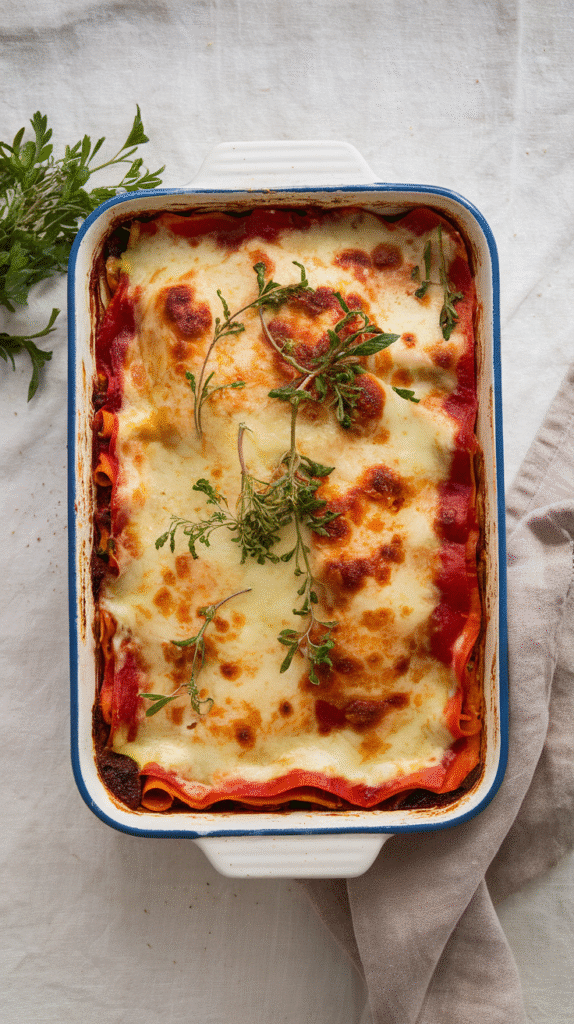
This lasagna balances richness and freshness.
The ricotta mixture brings creaminess, while sautéed vegetables and spinach add flavor and texture without watering down the sauce.
Using a simple, simmered marinara builds depth without fuss, and a blend of mozzarella and Parmesan gives that stretchy, savory top layer you expect from lasagna.
The structure holds together well thanks to properly cooked noodles and a smart layering method.
It’s classic comfort with a lighter touch.
Shopping List For Vegetarian Lasagna
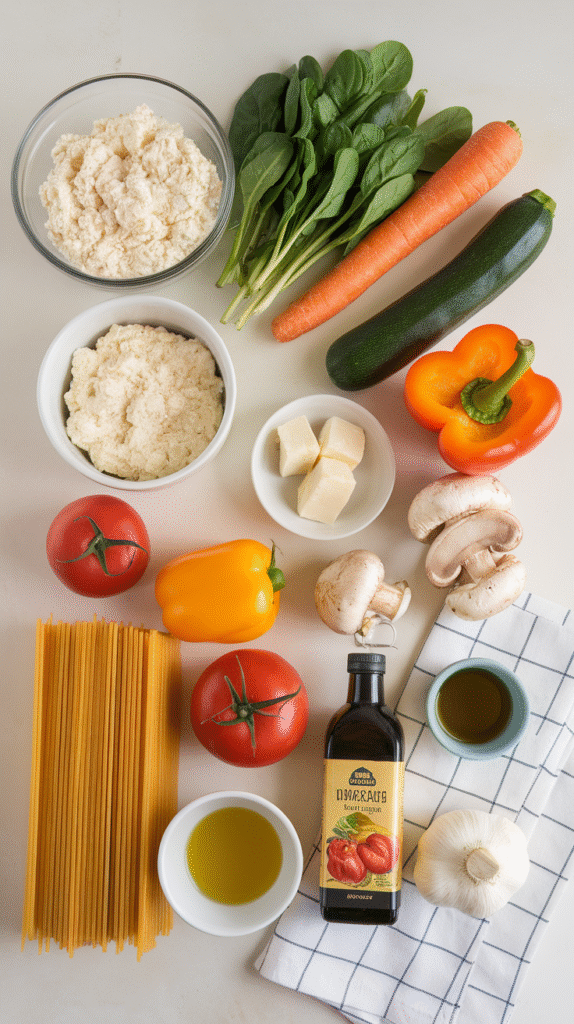
- Lasagna noodles: 12–15 sheets (regular or no-boil)
- Olive oil: 3 tablespoons
- Yellow onion: 1 medium, diced
- Garlic: 4 cloves, minced
- Carrots: 2 small, finely diced
- Bell pepper: 1 medium, diced (any color)
- Zucchini: 1 medium, diced
- Baby spinach: 5 ounces (about 5 cups)
- Mushrooms: 8 ounces, sliced (cremini or button)
- Crushed tomatoes: 1 can (28 ounces)
- Tomato paste: 2 tablespoons
- Dried oregano: 1 teaspoon
- Dried basil: 1 teaspoon
- Red pepper flakes: Pinch (optional)
- Ricotta cheese: 15 ounces (whole milk preferred)
- Egg: 1 large
- Mozzarella cheese: 3 cups shredded, divided
- Parmesan cheese: 3/4 cup grated, divided
- Fresh basil or parsley: Small handful, chopped
- Salt and black pepper: To taste
Step-by-Step Instructions
- Preheat and prep: Set your oven to 375°F (190°C).
Lightly oil a 9×13-inch baking dish. If using regular lasagna noodles, bring a large pot of salted water to a boil.
- Cook the noodles: Boil noodles until just shy of al dente (they’ll finish in the oven). Drain and lay on a lightly oiled sheet to prevent sticking.
If using no-boil noodles, skip this step.
- Sauté the vegetables: Heat 2 tablespoons olive oil in a large skillet over medium heat. Add onion and carrots with a pinch of salt; cook 5 minutes. Stir in bell pepper, zucchini, and mushrooms; cook until tender and most moisture evaporates, 6–8 minutes.
- Add garlic and spinach: Add garlic; cook 1 minute until fragrant.
Add spinach and cook until wilted. Season with salt, pepper, and a pinch of red pepper flakes if you like.
- Build the sauce: Push the vegetables to the side of the pan. Add 1 tablespoon olive oil and the tomato paste; cook 1 minute to caramelize.
Stir in crushed tomatoes, oregano, basil, 1/2 teaspoon salt, and a few grinds of pepper. Simmer 8–10 minutes to thicken slightly. Taste and adjust seasoning.
- Mix the ricotta layer: In a bowl, combine ricotta, egg, 1 cup mozzarella, 1/4 cup Parmesan, a pinch of salt, pepper, and chopped basil or parsley.
Stir until smooth.
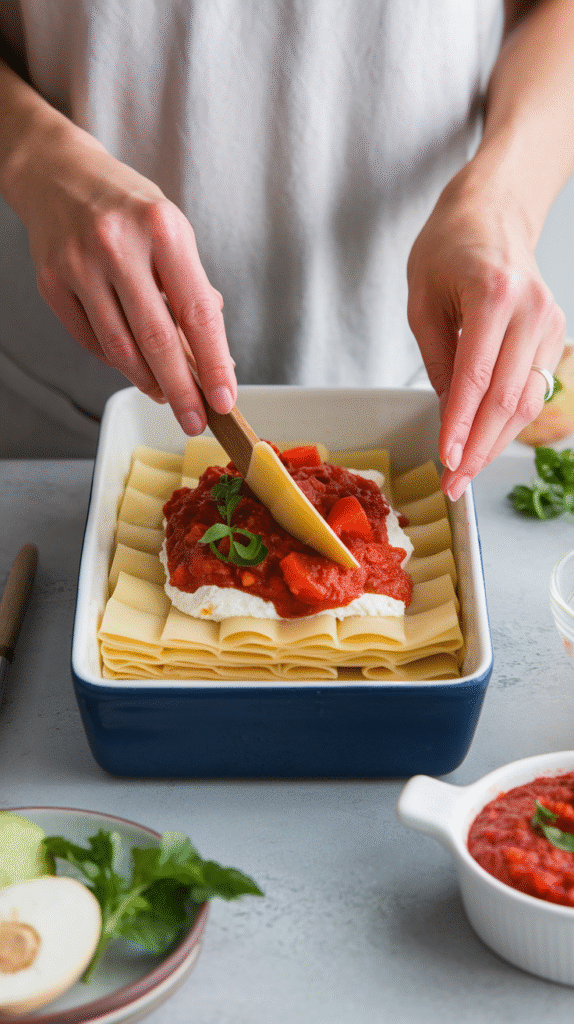
- Layer 1: Spread 1 cup of the sauce on the bottom of the baking dish. Add a layer of noodles, slightly overlapping.
- Layer 2: Dollop and spread half the ricotta mixture over the noodles. Spoon a generous layer of sauce with vegetables over top.
Sprinkle with 1 cup mozzarella and 1/4 cup Parmesan.
- Layer 3: Add another layer of noodles, the remaining ricotta, more sauce, and another 1 cup mozzarella.
- Final layer: Top with a last layer of noodles. Spread a thin layer of sauce over them and finish with remaining mozzarella and Parmesan. Cover tightly with foil (tent slightly so cheese doesn’t stick).
- Bake covered: Bake for 25 minutes covered to steam and set the layers.
- Finish uncovered: Remove foil and bake 15–20 minutes more, until bubbling and the top is lightly browned.
For extra color, broil 1–2 minutes, watching closely.
- Rest and serve: Let the lasagna rest 15–20 minutes before slicing. This helps it set and slice cleanly. Garnish with fresh herbs if you’d like.
How to Store
Cool completely, then cover tightly or transfer slices to airtight containers.
Refrigerate for up to 4 days. Reheat covered at 350°F until warmed through, or microwave individual slices.
For freezing, wrap the whole baked (or unbaked) lasagna in two layers of foil and freeze up to 3 months.
Thaw overnight in the fridge and bake covered until hot, or bake from frozen, adding extra time.
Benefits of This Recipe
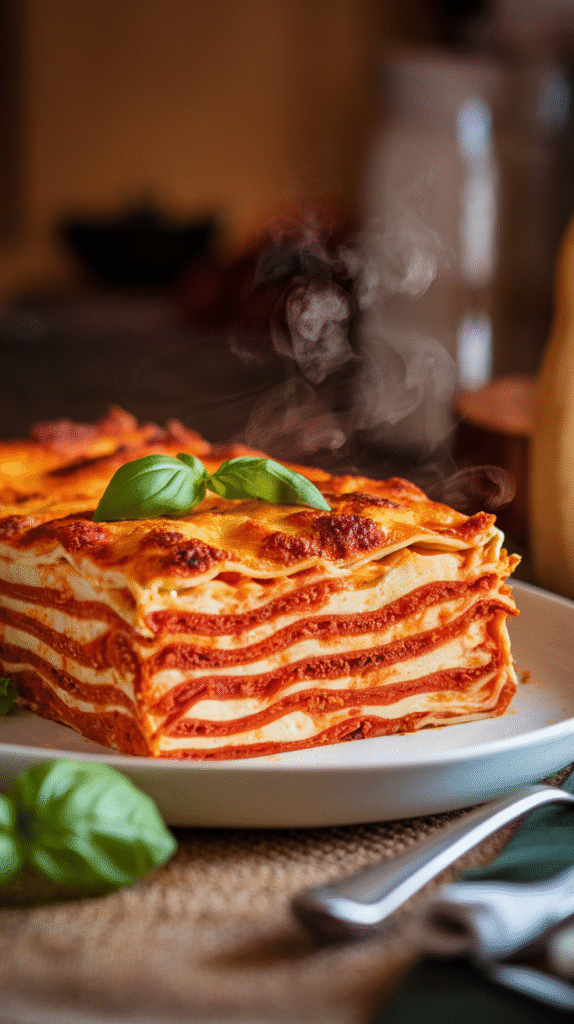
- Meal prep friendly: Makes generous portions that reheat well for lunches and dinners.
- Vegetable forward: Packs in mushrooms, zucchini, spinach, and more without losing that classic lasagna feel.
- Customizable: Swap veggies, adjust heat, or use different cheeses without compromising the structure.
- Comforting but balanced: Creamy ricotta and melty mozzarella meet bright tomato sauce for a satisfying, not heavy, dish.
- Crowd-pleaser: Familiar flavors that appeal to kids and adults, vegetarians and meat-eaters alike.
Pitfalls to Watch Out For
- Watery lasagna: Cook vegetables until most of their moisture evaporates, and simmer the sauce a bit to thicken.
- Overcooked noodles: Keep them slightly underdone if boiling; they’ll finish in the oven.
- Sliding layers: Let the lasagna rest at least 15 minutes before cutting so it firms up.
- Under-seasoning: Season each component, vegetables, sauce, and ricotta layer, for full, balanced flavor.
- Burned top: Keep it covered first, then uncover to brown. Tent foil to prevent cheese from sticking.
Alternatives
- Gluten-free: Use gluten-free lasagna noodles and confirm your tomato products are gluten-free.
- No-boil shortcut: Use no-boil noodles and add an extra 1/2 cup sauce to ensure proper hydration.
- Extra protein: Stir in a can of drained lentils to the sauce for more body and protein.
- Dairy tweaks: Swap part of the mozzarella for provolone or fontina; use part-skim ricotta if you prefer lighter.
- Veggie swaps: Try roasted eggplant, kale, or butternut squash for seasonal variation.
- Herb-forward: Add fresh basil and thyme to the sauce at the end for a brighter, garden flavor.
FAQ
Can I make this Vegetarian Lasagna ahead?
Yes. Assemble up to 24 hours in advance, cover tightly, and refrigerate.
Add 10–15 minutes to the covered bake time if baking straight from the fridge.
Do I need to drain the ricotta?
If your ricotta looks watery, drain it in a fine mesh sieve for 10–15 minutes. Drier ricotta helps prevent a soupy middle.
Can I freeze individual portions?
Absolutely. Slice, wrap each piece in plastic, then foil, and freeze.
Reheat covered at 350°F or microwave until hot.
What if I only have jarred marinara?
Use it. Warm the marinara and sautéed vegetables together for 5–10 minutes to meld flavors before layering.
How do I keep the cheese from sticking to the foil?
Tent the foil so it doesn’t touch the cheese, or lightly oil the foil on the side facing the lasagna.
Is this recipe kid-friendly?
Yes. The flavors are mild and familiar.
Skip the red pepper flakes and dice vegetables finely for a smoother texture.
Can I make it vegan?
Use vegan ricotta, plant-based mozzarella, and Parmesan-style shreds. Replace the egg in the ricotta mixture with 1–2 tablespoons olive oil or a splash of plant milk to loosen.
Wrapping Up
This Classic Vegetarian Lasagna hits that sweet spot between cozy and fresh, with layers that slice cleanly and flavors that only improve the next day.
It’s simple enough for a weeknight project and special enough for guests.
Keep the tips in mind, customize the vegetables, and make it your own.
Once you’ve tried this version, you’ll have a dependable, go-to lasagna for any occasion.

Hi, I am Pratiksh. A fitness enthusiast and food lover. I love to share my personal favorite home workouts and healthy recipes. My goal is to make home workouts more interesting and explore different recipes that are not just delicious but healthy too.