Super Delicious Vegan Coconut Curry Recipe!
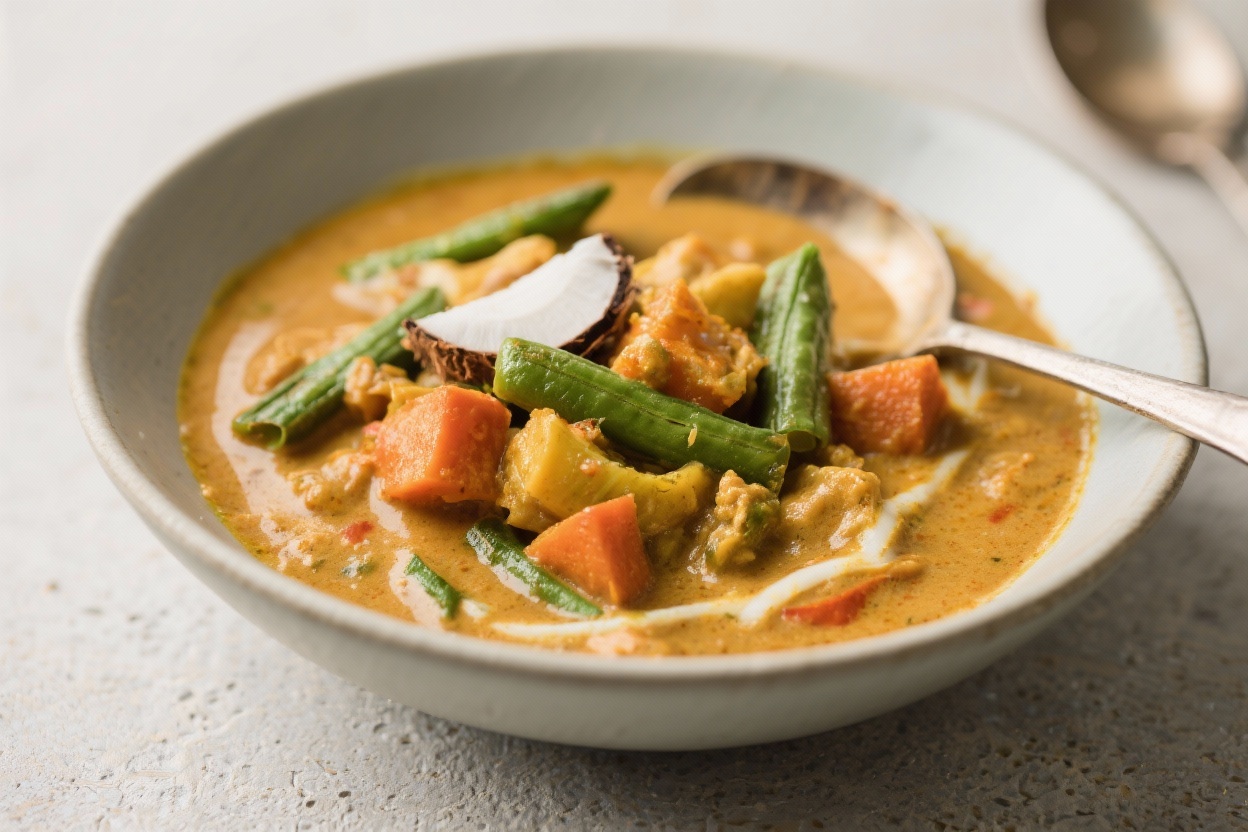
This Vegan Coconut Curry is the kind of meal you’ll want in your back pocket for busy nights.
It’s rich and creamy, full of warm spices, and loaded with colorful veggies that taste as good as they look.
The sauce comes together quickly with pantry staples, and the result is both satisfying and light.
Serve it with rice, quinoa, or warm flatbread, and you’ve got a complete meal in under an hour.
Why This Vegan Coconut Curry Recipe Works
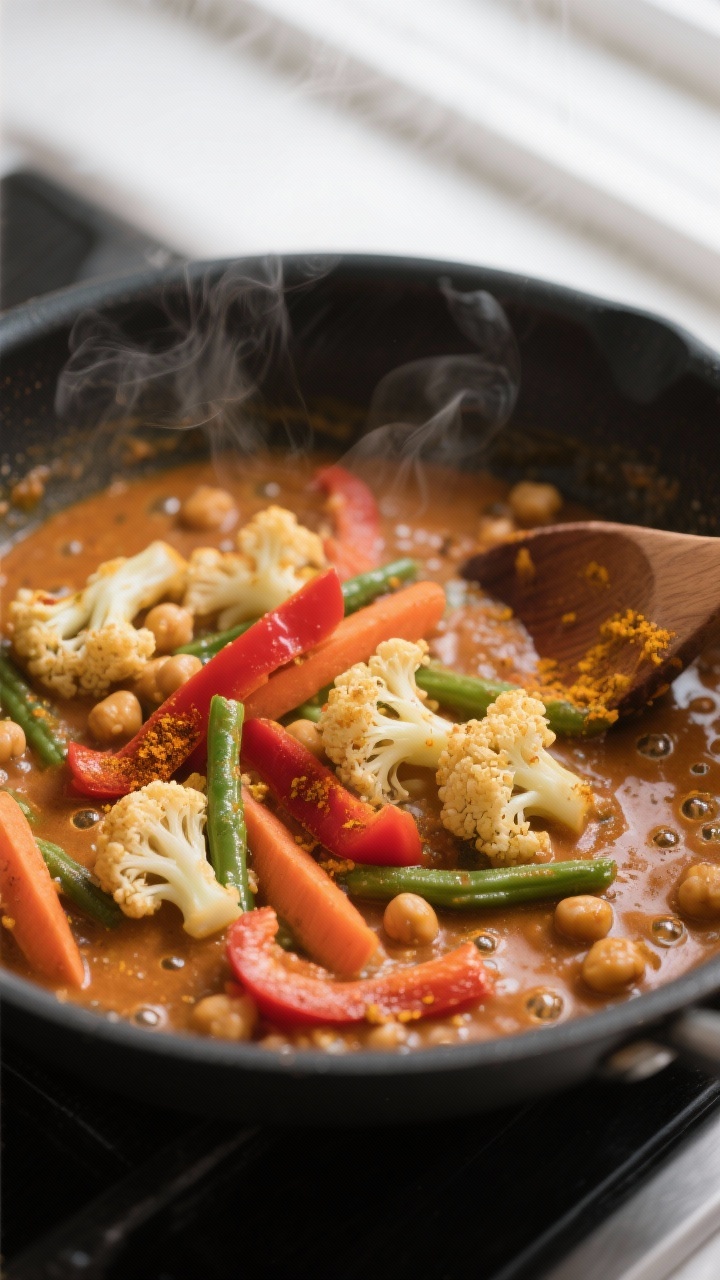
This curry leans on a few core techniques and ingredients that deliver big flavor with minimal effort.
The base of onion, garlic, and ginger builds a savory backbone that pairs beautifully with curry powder and a touch of turmeric.
Full-fat coconut milk makes the sauce silky, while tomatoes add brightness and balance.
Chickpeas provide protein and heartiness, so the dish feels complete without meat. Finally, a squeeze of lime and a handful of herbs lift everything at the end, keeping it fresh and vibrant.
Ingredients
- 1 tablespoon coconut oil (or olive oil)
- 1 medium yellow onion, finely chopped
- 3 cloves garlic, minced
- 1 tablespoon fresh ginger, grated
- 2 tablespoons curry powder (mild or medium)
- 1/2 teaspoon ground turmeric
- 1 teaspoon ground cumin (optional but recommended)
- 1/4 teaspoon red pepper flakes (optional for heat)
- 1 red bell pepper, sliced
- 2 cups chopped vegetables (such as cauliflower florets, carrots, green beans, or zucchini)
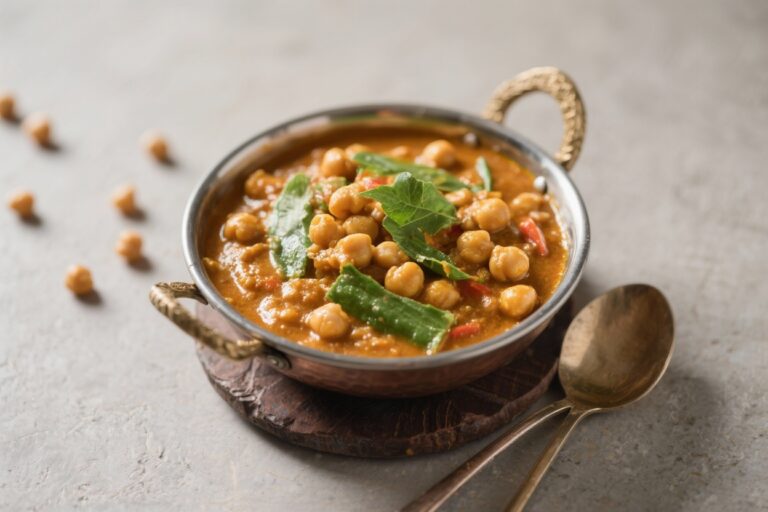
- 1 can (14–15 oz) chickpeas, drained and rinsed
- 1 can (14 oz) diced tomatoes (fire-roasted if available)
- 1 can (13.5–14 oz) full-fat coconut milk
- 1/2 cup vegetable broth (or water), plus more as needed
- 1–2 teaspoons maple syrup or sugar (to balance acidity, optional)
- 1–1.5 teaspoons fine sea salt, to taste
- Black pepper, to taste
- Juice of 1/2 lime (plus wedges for serving)
- Fresh cilantro or basil, chopped, for garnish
- Cooked rice, quinoa, or warm naan, for serving
Instructions
- Warm the aromatics: Heat the oil in a large skillet or pot over medium heat. Add the onion and a pinch of salt.Cook, stirring occasionally, until softened and lightly golden, about 5–7 minutes. Add the garlic and ginger, and cook 1 minute until fragrant.
- Bloom the spices: Stir in curry powder, turmeric, cumin, and red pepper flakes. Cook 30–60 seconds, stirring to coat the onions.This step wakes up the spices and deepens the flavor.
- Add vegetables and chickpeas: Add bell pepper and the chopped vegetables. Cook 3–4 minutes, just to start softening. Stir in chickpeas.
- Build the sauce: Pour in the diced tomatoes, coconut milk, and vegetable broth.Stir well. Bring to a gentle simmer.
- Simmer to tender: Reduce heat to medium-low and simmer uncovered for 12–15 minutes, or until the vegetables are tender and the sauce has slightly thickened. Stir occasionally to prevent sticking.
- Balance and season: Taste the sauce.Add salt, black pepper, and maple syrup if the tomatoes taste sharp. Squeeze in the lime juice and stir. Adjust seasoning until it’s bright and rounded.
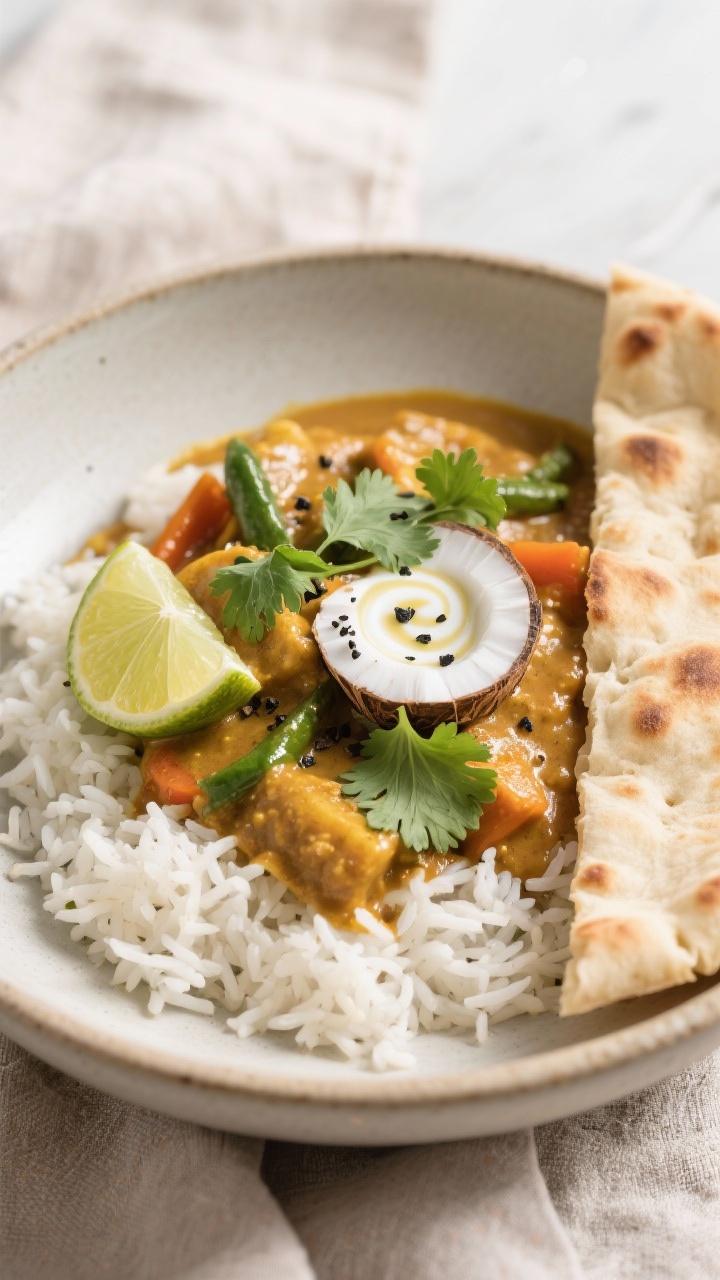
- Finish and serve: Remove from heat.Garnish with chopped cilantro or basil. Serve hot over rice or quinoa, or with warm naan on the side.
Storage Instructions
- Refrigerator: Store in an airtight container for 4–5 days. The flavors deepen by day two.
- Freezer: Freeze for up to 3 months.Cool completely before freezing. Thaw overnight in the fridge.
- Reheating: Reheat gently on the stove over medium-low, adding a splash of water or broth if the sauce is too thick. Microwave in short bursts, stirring between rounds.
Why This is Good for You
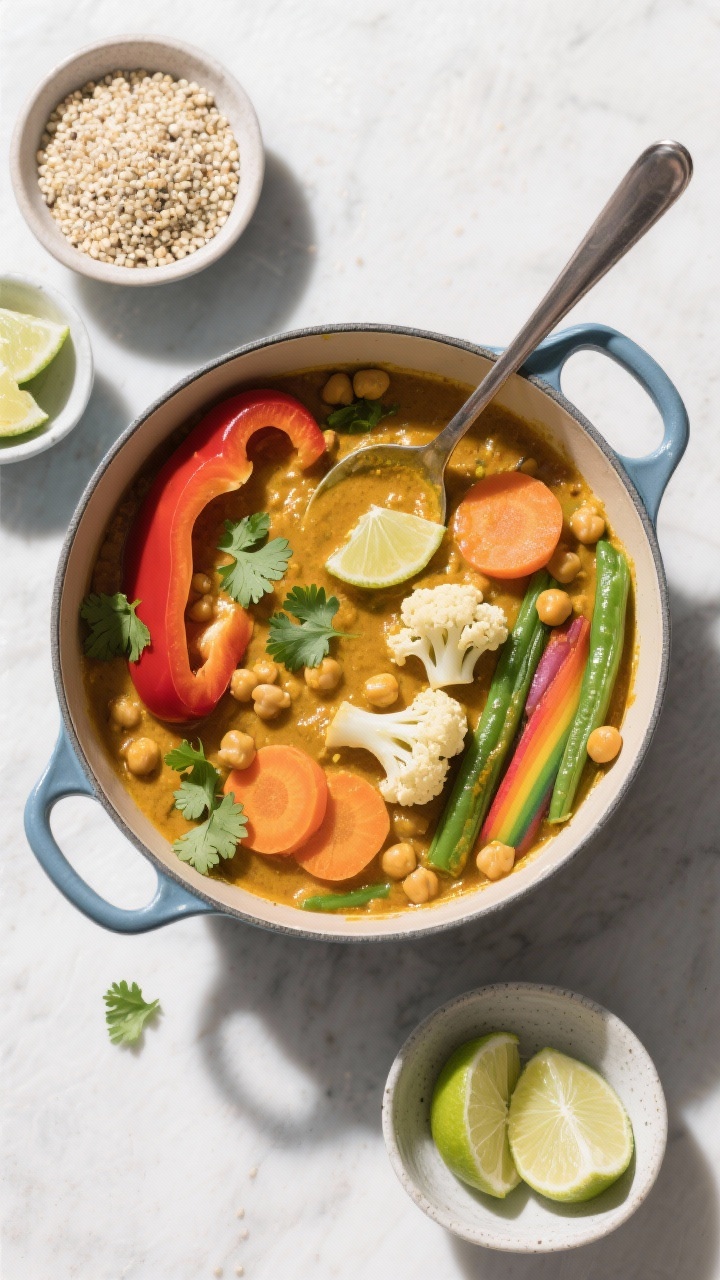
This curry packs a mix of fiber-rich vegetables and chickpeas, which help keep you full and support digestion.
Coconut milk provides satisfying fats that make the meal feel indulgent without needing dairy. Spices like turmeric, cumin, and ginger bring antioxidants and warming qualities. You’re getting a balanced bowl with protein, healthy fats, and complex carbs, especially when served with whole grains.
Pitfalls to Watch Out For
- Scorched spices: Spices can burn quickly.Keep the heat moderate and add liquid soon after blooming.
- Watery sauce: If the curry seems thin, simmer a little longer uncovered. If it’s too thick, add a splash of broth.
- Underseasoning: Curry needs enough salt and acid. Taste at the end and adjust with salt and lime for balance.
- Overcooked veggies: Add tender vegetables later in the process so they keep some bite and color.
- Using low-fat coconut milk: It can make the sauce less creamy.Full-fat gives the best texture and flavor.
Variations You Can Try
- Green curry twist: Stir in a spoonful of vegan green curry paste and add spinach, snap peas, and basil.
- Sweet potato and kale: Swap the mixed veggies for cubed sweet potato and shredded kale. Simmer a bit longer until the sweet potato is tender.
- Tofu upgrade: Add crispy pan-fried tofu cubes for extra protein and texture.
- Peanut-style curry: Whisk 2 tablespoons peanut butter into the sauce and garnish with crushed peanuts and lime.
- Mushroom umami: Sauté sliced mushrooms with the onions for deeper, savory flavor.
- Low-carb option: Serve over cauliflower rice or steamed greens.
FAQ
Can I use light coconut milk?
You can, but the curry will be thinner and less creamy. If you go with light coconut milk, simmer a few extra minutes to reduce, or add a small splash of cashew cream to boost richness.
What vegetables work best?
Cauliflower, carrots, bell peppers, zucchini, green beans, spinach, and peas all work well.
Use a mix of hearty and tender veggies for good texture contrast.
Is this Vegan Coconut curry spicy?
As written, it’s mild to medium. Adjust heat by adding or reducing red pepper flakes, or stir in a little fresh chili or hot sauce to taste.
Can I make it oil-free?
Yes. Sauté the onions in a splash of water or broth, adding more as needed to prevent sticking.
The coconut milk still brings plenty of richness.
How can I thicken the sauce without simmering too long?
Stir in a small slurry of cornstarch (1 teaspoon mixed with 1 tablespoon water) near the end, then simmer 1–2 minutes. Or mash a few chickpeas into the sauce for a natural thickener.
What can I use instead of chickpeas?
White beans, cubed tofu, or tempeh are great alternatives. Lentils also work, but use pre-cooked or canned to keep the timing similar.
Can I make it ahead?
Absolutely.
The flavors improve after a day in the fridge. Reheat gently and add a squeeze of fresh lime to wake it up before serving.
In Conclusion
This Vegan Coconut Curry is simple, flexible, and incredibly satisfying. With a creamy base, bright aromatics, and a rainbow of vegetables, it’s a cozy bowl that fits any night of the week.
Keep the ingredients on hand, tweak the veggies to what you have, and let the spices do the heavy lifting.
It’s the kind of meal you’ll make once and crave again soon after.