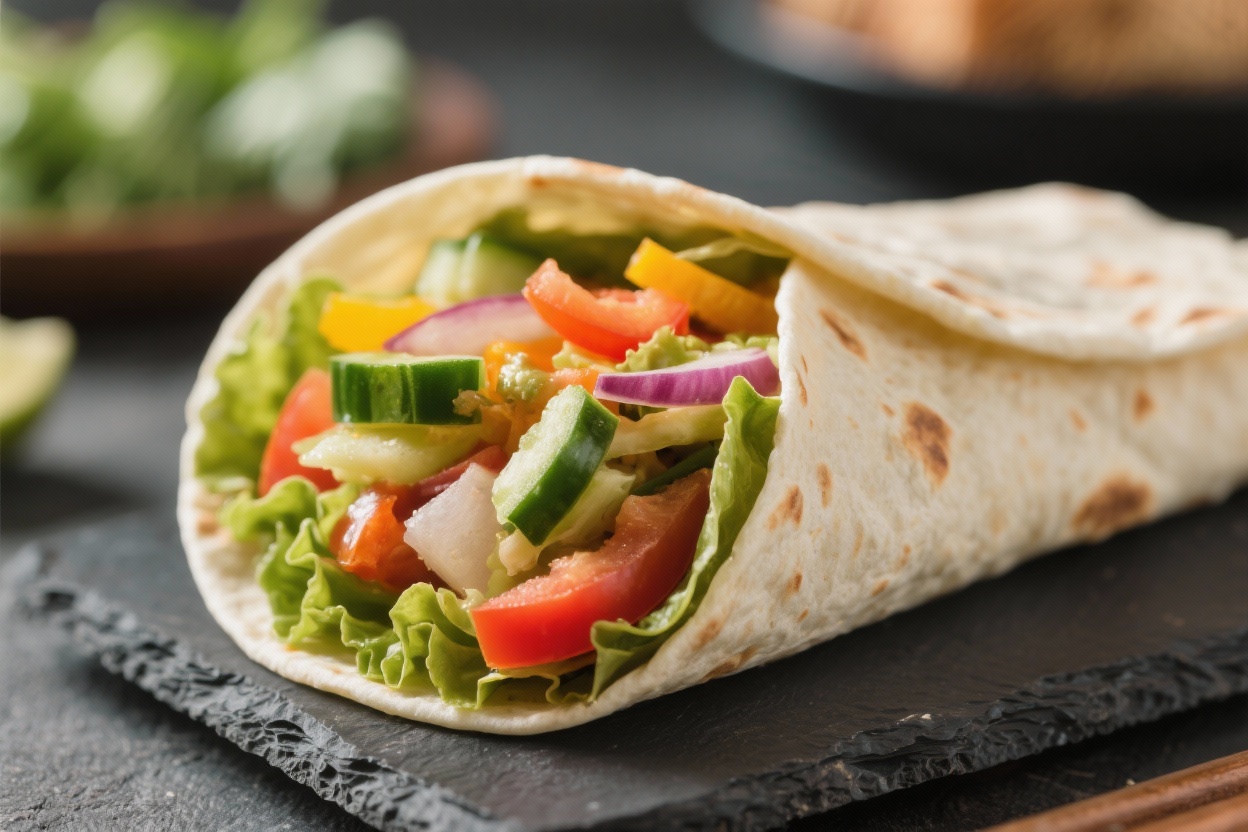
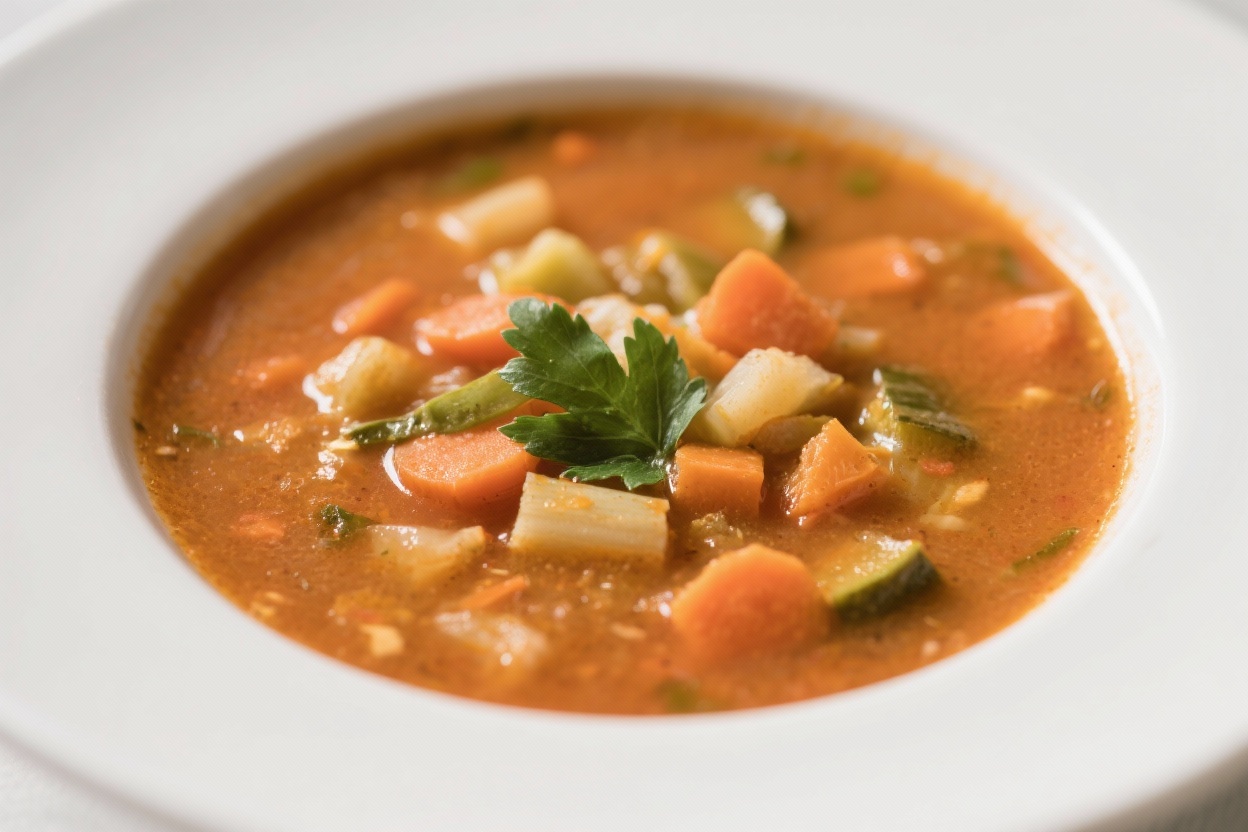
This thick vegetable soup is the kind of meal you can make on a weeknight and feel good about.
It’s warm, satisfying, and packed with flavor, without needing fancy ingredients.
Everything simmers together into a rich, velvety bowl that tastes like it took hours, even if it didn’t.
It’s easy to customize based on what you have and what you like.
One pot, minimal fuss, and a lot of comfort.
Why This Thick Vegetable Soup Recipe Works
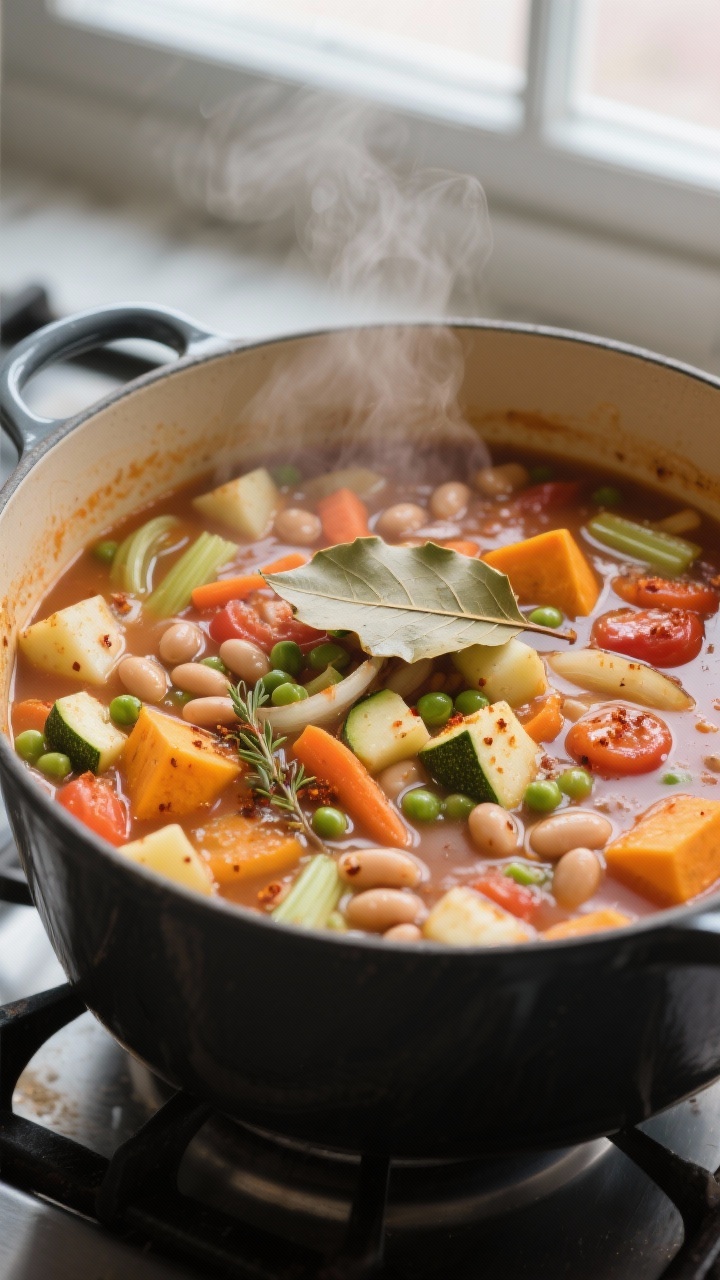
This soup relies on simple techniques that build deep flavor. Sautéing onions, carrots, and celery first creates a savory base that gives the soup body.
Potatoes and beans help thicken the broth naturally, so you don’t need cream or flour. A short blend at the end (just a portion of the pot) makes it thick and lush while keeping some texture. Fresh herbs and a splash of acidity brighten the final taste, balancing the earthy vegetables.
Shopping List
- Olive oil (2–3 tablespoons)
- Yellow onion (1 large), diced
- Carrots (2), diced
- Celery (2 stalks), diced
- Garlic (4 cloves), minced
- Russet or Yukon Gold potatoes (2 medium), peeled and cubed
- Butternut squash (about 2 cups), peeled and cubed (or sweet potato)
- Zucchini (1), diced
- Crushed tomatoes (1 can, 14–15 oz)
- Vegetable broth (6 cups)
- Cannellini or great northern beans (1 can, drained and rinsed)
- Frozen peas (1 cup)
- Bay leaf (1)
- Dried thyme (1 teaspoon)
- Smoked paprika (1 teaspoon)
- Fresh parsley (a small handful), chopped
- Lemon (1), for juice
- Salt and black pepper, to taste
- Optional: red pepper flakes, spinach or kale, Parmesan rind, or a splash of balsamic vinegar
Step-by-Step Instructions
- Prep your vegetables. Dice the onion, carrots, and celery.Cube the potatoes and squash. Dice the zucchini. Mince the garlic.
Keep everything roughly the same size so it cooks evenly.
- Build the flavor base. Warm olive oil in a large pot over medium heat. Add onion, carrots, and celery with a pinch of salt. Cook 6–8 minutes, stirring, until the vegetables soften and the onions are translucent.
- Add garlic and spices. Stir in garlic, dried thyme, and smoked paprika.Cook 1 minute until fragrant. If using red pepper flakes, add a pinch now.
- Layer the hearty veggies. Add potatoes and butternut squash. Stir to coat in the seasoned oil and aromatics for 2 minutes.This step helps the soup taste richer.
- Pour in liquids. Add crushed tomatoes and vegetable broth. Drop in the bay leaf and, if you have it, a Parmesan rind. Bring to a gentle boil, then reduce to a simmer.
- Simmer until tender. Cook 20–25 minutes, partially covered, until the potatoes and squash are very soft.Stir occasionally and adjust heat to maintain a steady simmer.
- Add beans and faster-cooking veg. Stir in the cannellini beans and zucchini. Simmer 8–10 minutes more, until the zucchini is tender. Add peas in the last 3 minutes.
- Thicken the soup. Remove the bay leaf (and Parmesan rind).Use an immersion blender to blend 3–4 quick pulses right in the pot, or scoop out 2 cups of soup, blend until smooth, and return it to the pot. Blending part of the soup makes it thick and creamy without dairy.
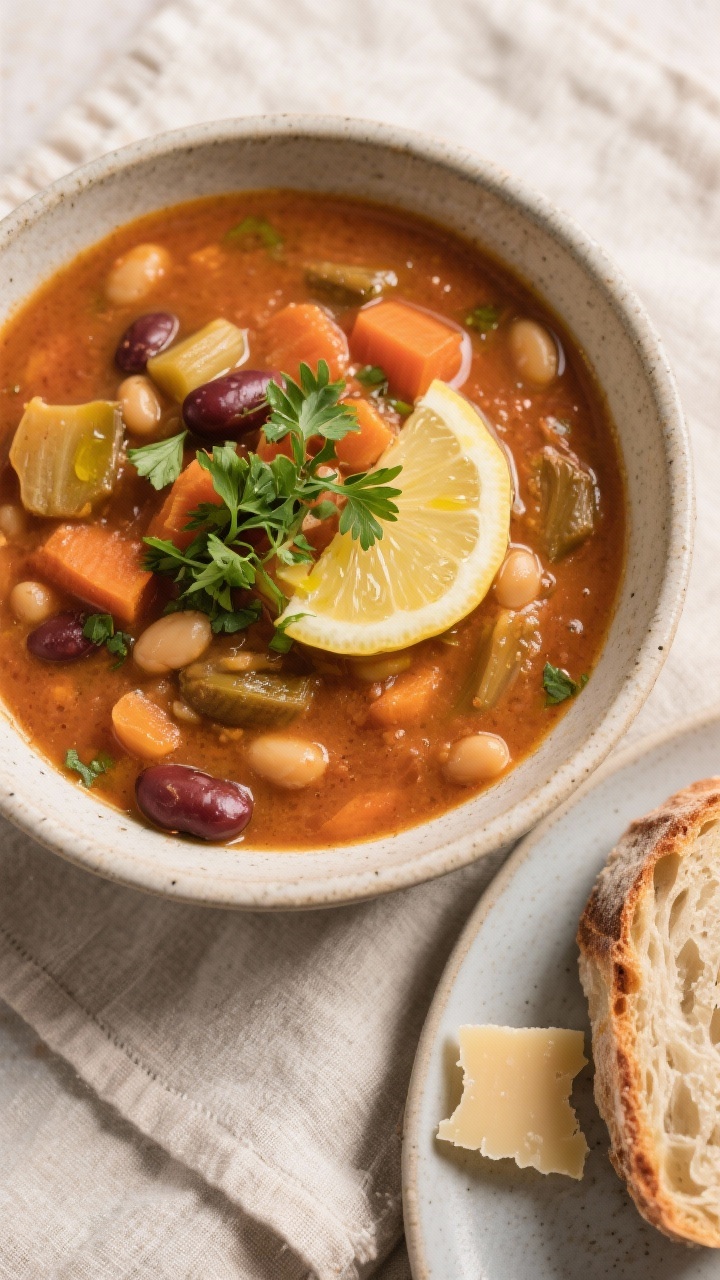
- Finish and brighten. Stir in chopped parsley and a squeeze of lemon juice. Taste and adjust with salt and pepper. If you like a deeper sweetness and tang, add a small splash of balsamic.
- Serve. Ladle into warm bowls.For extra richness, drizzle with good olive oil or add a spoonful of pesto. Crusty bread on the side is always a good idea.
Storage Instructions
- Refrigerator: Cool completely, then store in airtight containers for up to 4 days.
- Freezer: Freeze in portions for up to 3 months. Leave a little room at the top of containers for expansion.
- Reheating: Warm gently on the stove over low heat, adding a splash of water or broth if it thickened in the fridge.Adjust seasoning after reheating.
- Meal prep tip: Freeze in individual portions for easy lunches. Add greens or cooked grains when reheating to keep textures fresh.
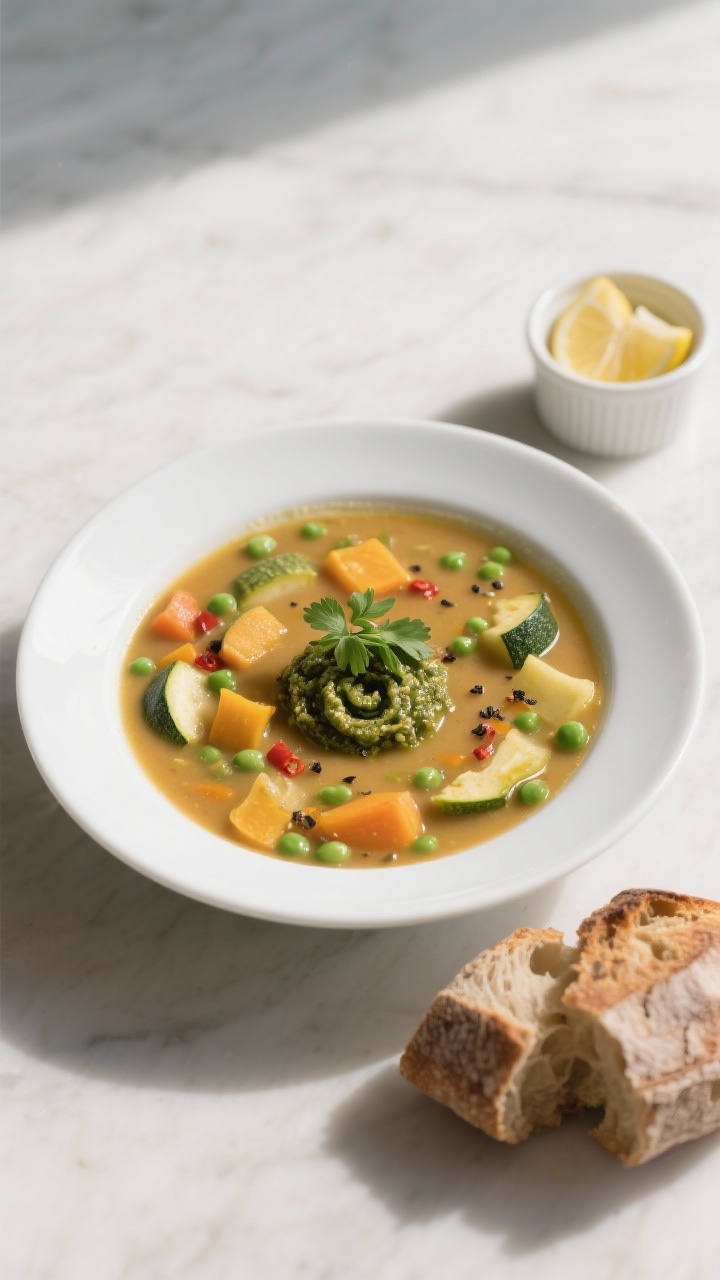
Why This is Good for You
This soup is nutrient-dense without feeling heavy.
You get fiber from beans, peas, and vegetables, which helps keep you full and supports digestion.
Potatoes and squash offer complex carbs for steady energy, while tomatoes add lycopene and antioxidants.
There’s no cream, and you control the salt, so it’s a heart-friendly option.
Add leafy greens at the end for extra iron and vitamin K.
Common Mistakes to Avoid
- Skipping the sauté. Starting with raw vegetables in broth leads to a flat flavor.Sautéing builds the base.
- Boiling too hard. A rolling boil breaks down vegetables unevenly and can turn beans mushy. Keep it to a gentle simmer.
- Over-blending. Puree only part of the soup. Full blending can make the texture gluey and one-note.
- Under-seasoning. Taste at the end and after reheating.The thickness can mask salt, so you may need a bit more.
- Skipping acidity. Lemon or vinegar makes the flavors pop. Without it, the soup can taste dull.
Alternatives
- Protein boosts: Add cooked lentils, shredded rotisserie chicken, or browned Italian sausage. If using sausage, cook it first and build the soup in the same pot.
- Different beans: Try chickpeas, navy beans, or kidney beans.Each adds a slightly different texture.
- Veg swaps: Use sweet potato instead of squash, or add mushrooms, bell peppers, or cauliflower. Frozen mixed vegetables work in a pinch.
- Greens: Stir in chopped spinach, kale, or Swiss chard during the last few minutes. Kale takes a bit longer to soften.
- Grains and pasta: Cooked barley, farro, or small pasta like ditalini make the soup extra hearty. Cook grains separately to avoid soaking up too much broth.
- Spice profiles: For a Mediterranean vibe, add oregano and a pinch of cumin.For a smoky kick, use more smoked paprika and a dash of chipotle. For a curry twist, swap paprika for curry powder and add coconut milk at the end.
FAQ
Can I make this Thick Vegetable soup in a slow cooker?
Yes. Sauté the onion, carrots, celery, and garlic on the stove first, then transfer to the slow cooker with the potatoes, squash, tomatoes, broth, bay leaf, and spices.
Cook on Low for 6–8 hours. Add beans, zucchini, and peas in the last 30–45 minutes. Partially blend before serving.
What if I don’t have an immersion blender?
Scoop 2 cups of soup into a regular blender, vent the lid, and blend carefully.
Return it to the pot and stir. Repeat if you want it thicker. You can also mash with a potato masher for a rustic texture.
How can I make it creamier without dairy?
Blend more of the soup, or add a spoonful of tahini or cashew cream at the end.
A small amount goes a long way and keeps the flavor balanced.
Is this soup gluten-free?
Yes, as written. Just ensure your broth is certified gluten-free and avoid adding pasta unless it’s a gluten-free variety.
How do I keep the vegetables from getting mushy?
Add firmer vegetables earlier and delicate ones later. Keep the heat at a gentle simmer, and check doneness toward the end rather than setting a timer and walking away.
Can I use fresh tomatoes instead of canned?
Yes.
Use about 3 cups of chopped ripe tomatoes. Add a tablespoon of tomato paste for depth, since canned crushed tomatoes are more concentrated.
What can I do if the soup is too thick?
Thin it with warm water or broth, a half cup at a time, until it reaches the texture you like. Taste and re-season after adjusting.
How can I add more flavor if it tastes bland?
Try a pinch of extra salt, a squeeze of lemon, or a splash of balsamic.
Fresh herbs at the end, a drizzle of olive oil, or a bit of grated Parmesan can also wake up the flavors.
Wrapping Up
Thick vegetable soup is a simple, flexible, and deeply satisfying meal.
With a few pantry staples and fresh produce, you can make a pot that feeds you for days.
The partial blend trick gives it that cozy, creamy feel without extra heaviness.
Keep this recipe as a base and make it your own with different veggies, proteins, and spices. It’s comfort in a bowl, any night of the week.

Hello, I’m an athlete and a food lover who shares vegetarian recipes that are both delicious and nourishing. I enjoy creating salads, pastas, smoothies, and guilt-free desserts you can enjoy without stressing about calories.