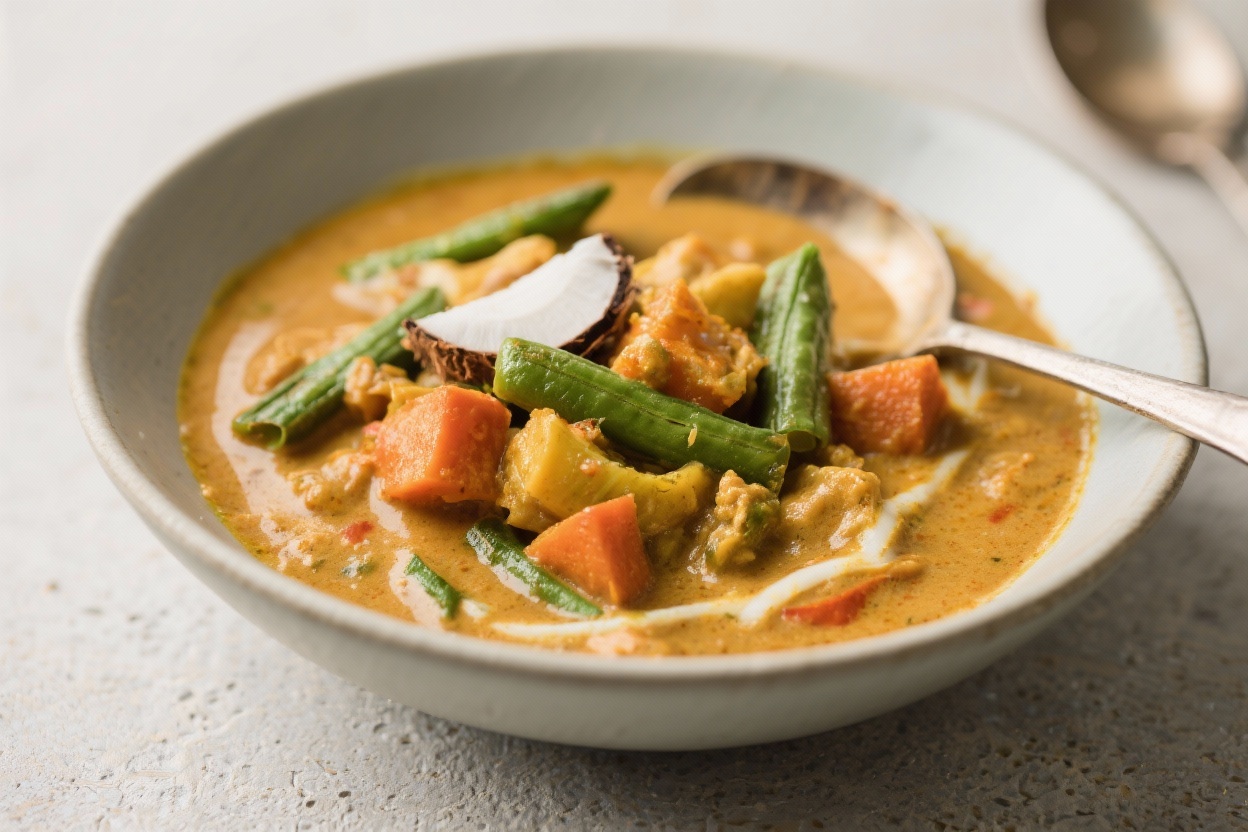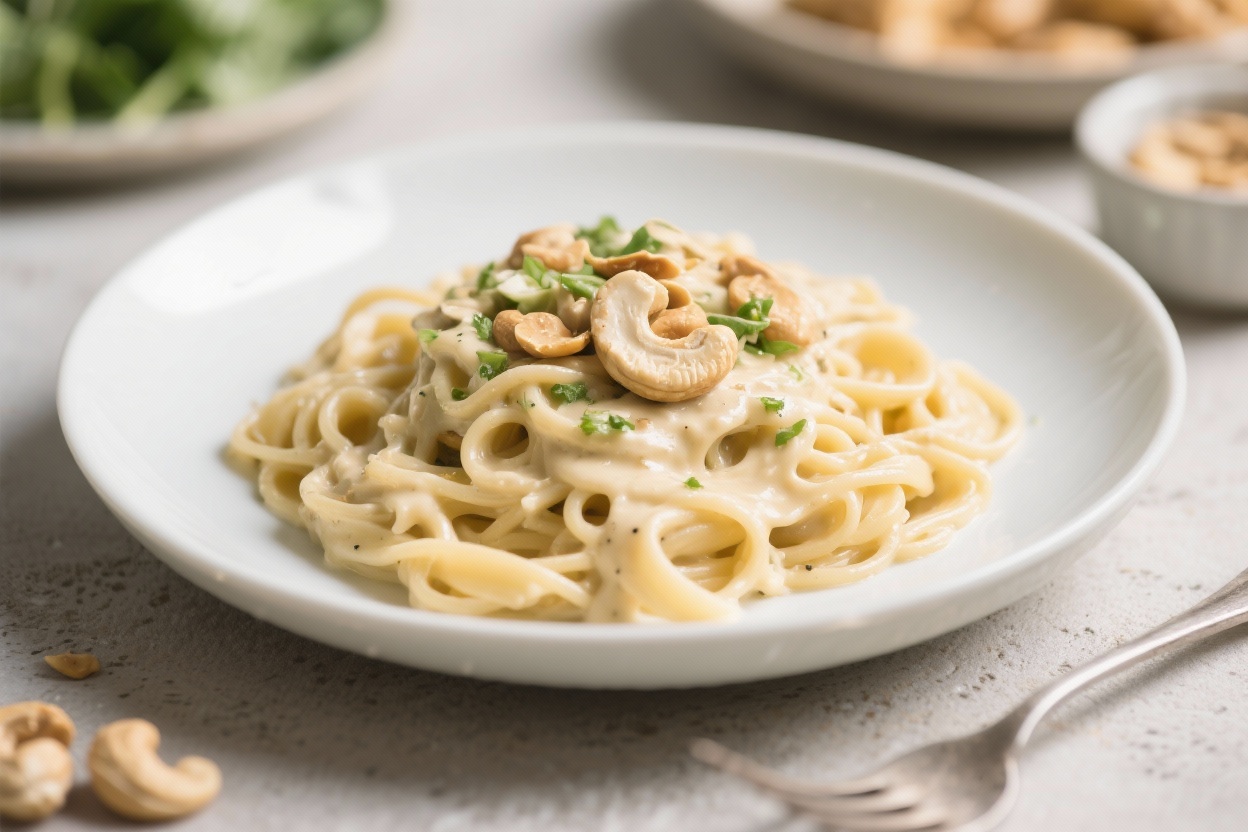
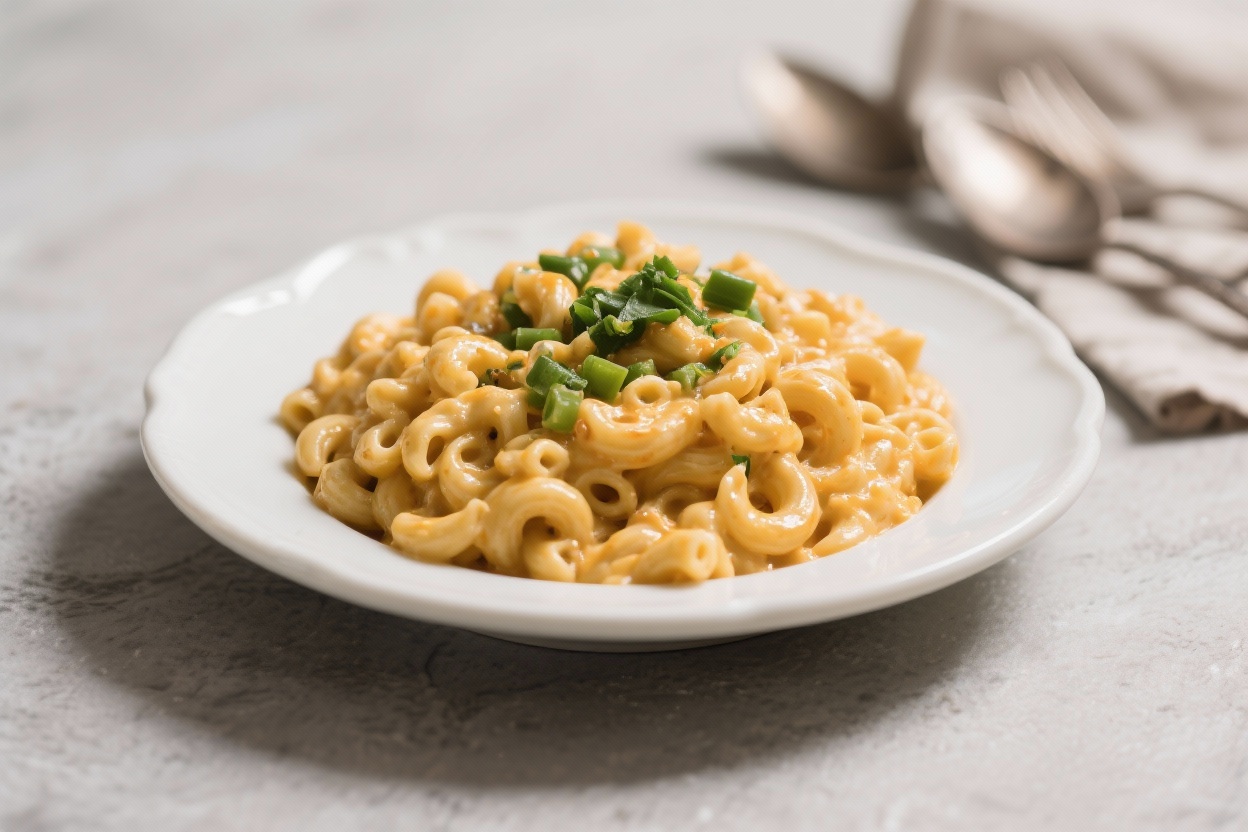
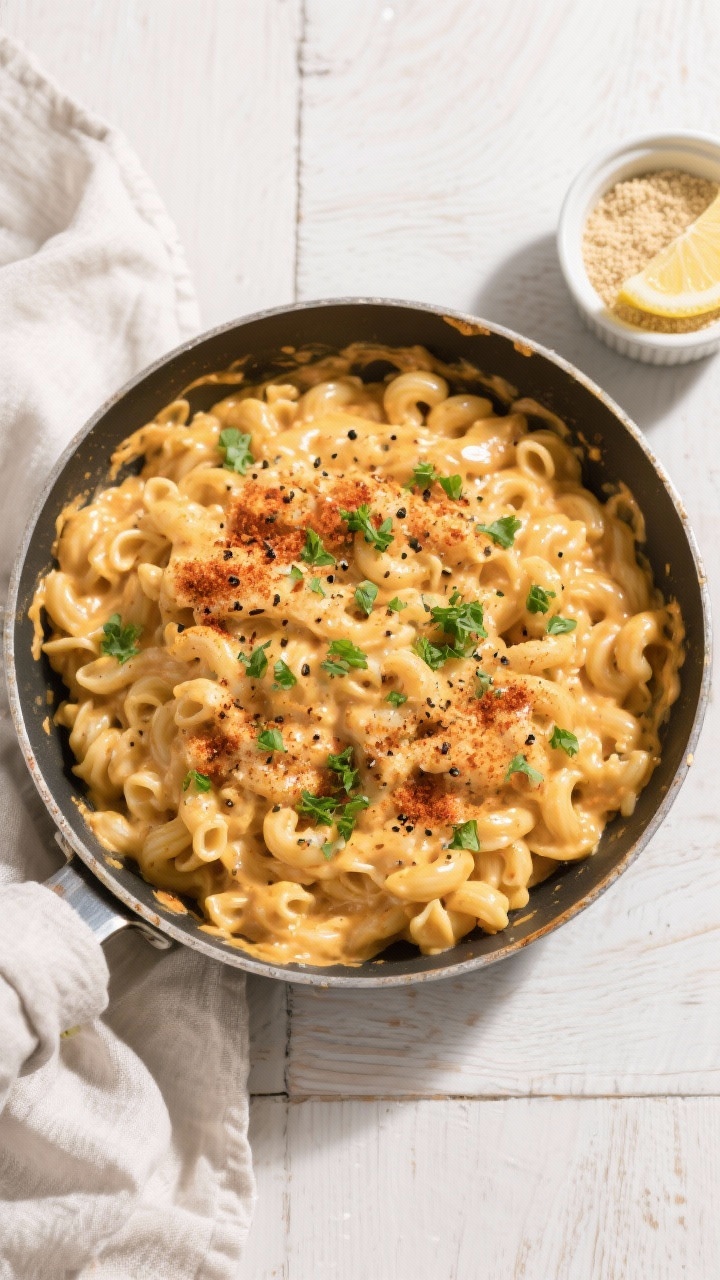
This vegan mac and cheese is rich, creamy, and reassuring in the best way.
It tastes like classic comfort food but leans lighter, using whole-food ingredients and pantry staples.
The sauce is silky, the pasta is tender, and the flavor is cheesy without any dairy.
You don’t need special equipment or hard-to-find products. Just simple steps, a few smart tricks, and a weeknight-friendly timeline.
Why This Vegan Mac and Cheese Recipe Works
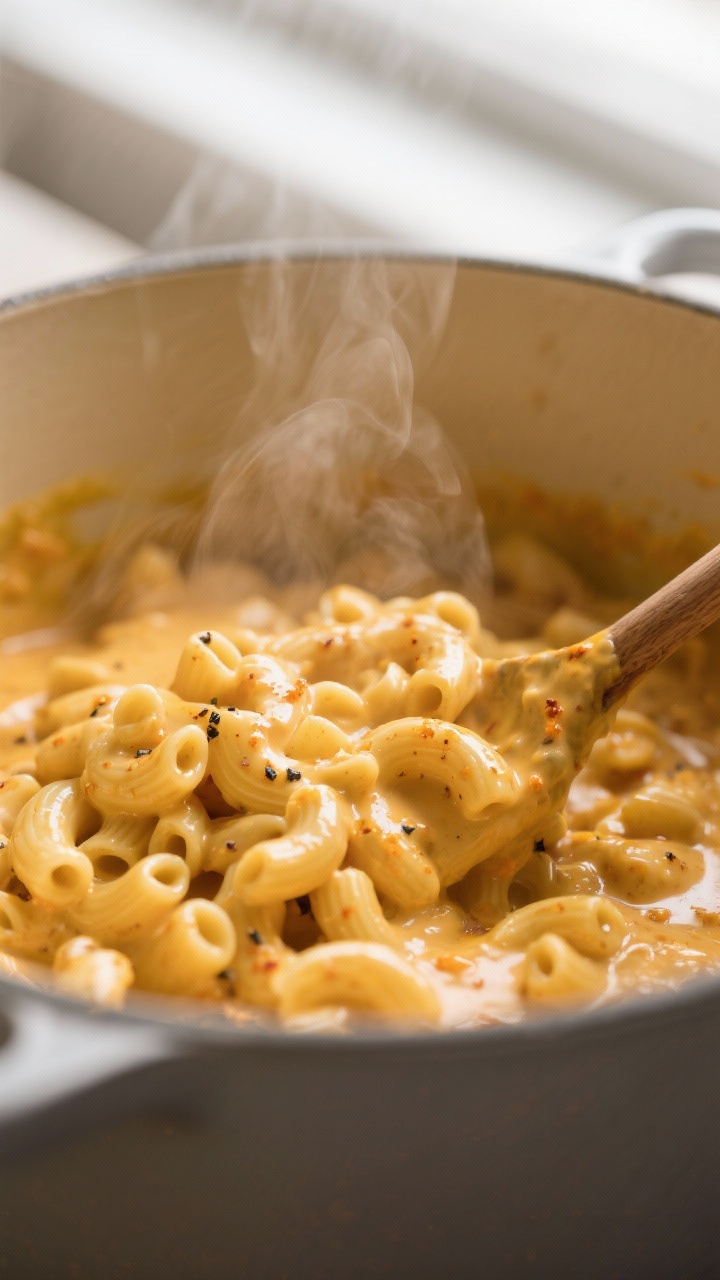
This version pairs a classic macaroni base with a sauce built from cashews, potatoes, carrots, and a few umami boosters.
The starches from the potatoes create body, while soaked cashews add lush creaminess.
Carrots and nutritional yeast bring color and cheesy depth without relying on processed vegan cheeses.
Lemon juice and mustard brighten everything, and a touch of miso or soy sauce layers in savory notes.
The result is a sauce that clings to the pasta and tastes comfortingly “cheesy,” with clean, simple ingredients.
What You’ll Need
- Elbow macaroni or any short pasta (about 12 ounces)
- Raw cashews (1 cup), soaked
- Russet or Yukon Gold potato (1 medium), peeled and diced
- Carrot (1 medium), peeled and chopped
- Onion (1/2 small), roughly chopped
- Garlic (2 cloves)
- Nutritional yeast (1/3–1/2 cup)
- Unsweetened plant milk (1 to 1 1/2 cups; almond, cashew, or oat)
- Olive oil or vegan butter (2 tablespoons)
- Lemon juice (1–2 tablespoons)
- Dijon mustard (1 teaspoon)
- White or yellow miso paste (1 teaspoon) or soy sauce/tamari (1–2 teaspoons)
- Smoked paprika (1/2 teaspoon) and/or sweet paprika (1/2 teaspoon)
- Turmeric (a pinch, for color)
- Salt and black pepper (to taste)
- Optional: hot sauce, garlic powder, onion powder, vegan parmesan, breadcrumbs, or chopped parsley
Step-by-Step Instructions
- Soak the cashews: Place the cashews in hot water for at least 20–30 minutes.For extra creaminess, soak for 2 hours or overnight. Drain before using.
- Cook the pasta: Bring a large pot of salted water to a boil. Add the macaroni and cook until just al dente.Reserve 1 cup of pasta water, then drain and set aside.
- Simmer the veggies: In a medium saucepan, add the diced potato, carrot, onion, and garlic. Cover with water and add a pinch of salt. Simmer for 10–12 minutes, until the potatoes and carrots are fork-tender.Drain well.
- Blend the sauce base: Add the soaked cashews, drained vegetables, nutritional yeast, plant milk (start with 1 cup), olive oil, lemon juice, Dijon, miso (or soy sauce), paprika, turmeric, and a generous pinch of salt and pepper to a blender.
- Blend until silky: Blend on high for 1–2 minutes until completely smooth and glossy. If it’s too thick, add more plant milk or some of the reserved pasta water, a little at a time. Taste and adjust salt, lemon, and mustard to balance the flavors.
- Warm the sauce: Return the sauce to a pot over low heat and stir until steamy.This helps it thicken slightly and meld the flavors. If it thickens too much, splash in more plant milk or pasta water.
- Combine with pasta: Add the cooked pasta to the sauce and stir to coat. If the sauce tightens, loosen with pasta water.Season with more pepper, a pinch of garlic or onion powder if you like, and a few drops of hot sauce for kick.
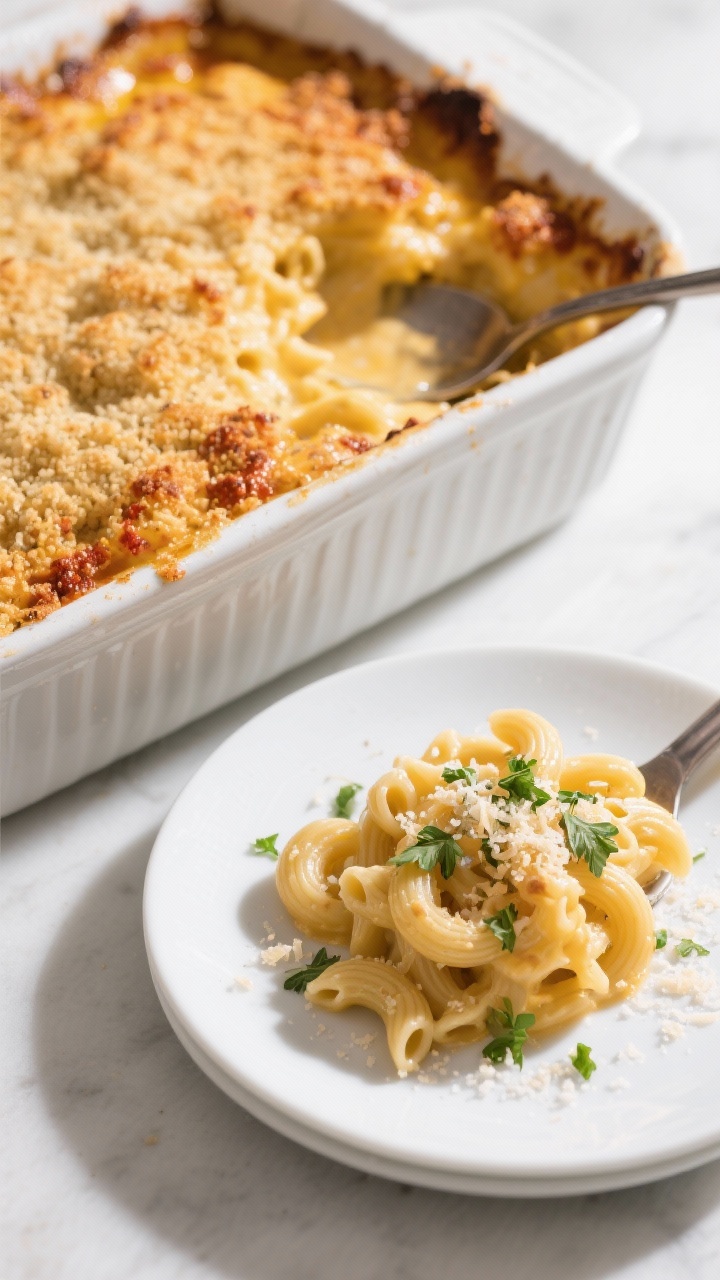
- Optional bake: For a casserole vibe, transfer to a baking dish, top with breadcrumbs mixed with a little olive oil and paprika, and bake at 375°F (190°C) for 12–15 minutes until lightly golden.
- Serve: Finish with a sprinkle of vegan parmesan or chopped parsley. Serve hot and creamy.
How to Store
Store leftovers in an airtight container in the fridge for up to 4 days. The sauce will thicken as it chills.
When reheating, add a splash of plant milk or water and warm gently on the stovetop or in the microwave, stirring often. For longer storage, freeze in individual portions for up to 2 months. Thaw overnight in the fridge and reheat with extra liquid to restore creaminess.
Benefits of This Recipe
- Whole-food creamy base: Potatoes, carrots, and cashews create a satisfying sauce without processed ingredients.
- Protein and fiber: Cashews and nutritional yeast add protein; whole-wheat or legume pasta boosts fiber and nutrients.
- Dairy-free comfort: Ideal for lactose intolerance or a plant-based lifestyle, without sacrificing texture.
- Budget-friendly: Uses pantry staples and common produce, no pricey substitutes required.
- Customizable: Easy to adapt with spices, veggies, or toppings to match your taste.
Common Mistakes to Avoid
- Skipping the soak: Unsoaked cashews can leave a grainy sauce.A quick hot-water soak makes a big difference.
- Under-seasoning: Vegan sauces need bold seasoning. Taste repeatedly and adjust salt, lemon, mustard, and nutritional yeast.
- Overcooking pasta: Al dente pasta holds up better and doesn’t turn mushy when mixed with sauce.
- Not draining vegetables well: Excess water dilutes flavor and thins the sauce. Drain thoroughly before blending.
- Too thick or too thin: Control consistency with plant milk and pasta water.The sauce should pour but still cling to the pasta.
Recipe Variations
- Broccoli and Peas: Stir in steamed broccoli florets and peas for color and extra veg.
- Spicy Buffalo: Add hot sauce and a pinch of cayenne; finish with sliced green onions.
- Smoky BBQ: Add smoked paprika and a splash of BBQ sauce; top with crispy baked chickpeas.
- Truffle Mushroom: Sauté mushrooms with garlic and thyme, fold into the sauce, and finish with a few drops of truffle oil.
- Butternut Blend: Swap the carrot for roasted butternut squash to boost sweetness and color.
- Gluten-Free: Use gluten-free pasta and tamari. Check miso and breadcrumbs for gluten-free labeling.
- Nut-Free: Replace cashews with silken tofu (about 1 1/4 cups) and add 1 tablespoon olive oil for richness.
Can I make this Vegan Mac and Cheese without a high-speed blender?
Yes. Soak the cashews longer (2–4 hours) or simmer them for 15 minutes to soften.
Blend in stages and be patient, scraping down the sides. If you have an immersion blender, blend in the pot and finish in a standard blender for smoothness.
What can I use instead of cashews?
Silken tofu, sunflower seeds (soaked), or a mix of cauliflower and a tablespoon of olive oil work well. Each option changes the flavor slightly, so adjust lemon, mustard, and nutritional yeast to taste.
How do I make it extra cheesy-tasting?
Add more nutritional yeast, a dash of white miso, and a small splash of soy sauce or tamari.
A pinch of lactic acid powder (if you have it) or extra lemon can sharpen the tangy notes.
Can I prepare the sauce ahead of time?
Absolutely. Blend the sauce up to 3 days ahead and refrigerate. Reheat gently, adding plant milk to loosen, then mix with freshly cooked pasta.
Why is my sauce grainy?
Usually, the cashews weren’t soft enough or the blender didn’t fully emulsify.
Soak longer, blend longer, and add a bit more liquid. If needed, pass the sauce through a fine mesh strainer for an ultra-smooth finish.
Is nutritional yeast necessary?
It’s key for cheesy flavor, but if you don’t have it, boost umami with extra miso and a bit more mustard and lemon. The sauce will still be creamy, just less “cheesy.”
What pasta shape works best?
Elbows are classic, but shells, cavatappi, and small rotini hold sauce beautifully.
Choose shapes with ridges or curves to catch the creamy sauce.
In Conclusion
This vegan mac and cheese brings the cozy, creamy experience you want, using everyday plant-based ingredients.
It’s simple to make, easy to reheat, and endlessly adaptable.
Whether you bake it with a crunchy topping or keep it stovetop-silky, it delivers the kind of bowl you’ll crave again and again.

Hello, I’m an athlete and a food lover who shares vegetarian recipes that are both delicious and nourishing. I enjoy creating salads, pastas, smoothies, and guilt-free desserts you can enjoy without stressing about calories.