Some recipes you cook once out of obligation, maybe you promised yourself you’d “eat more vegetables” or your wallet staged an intervention.
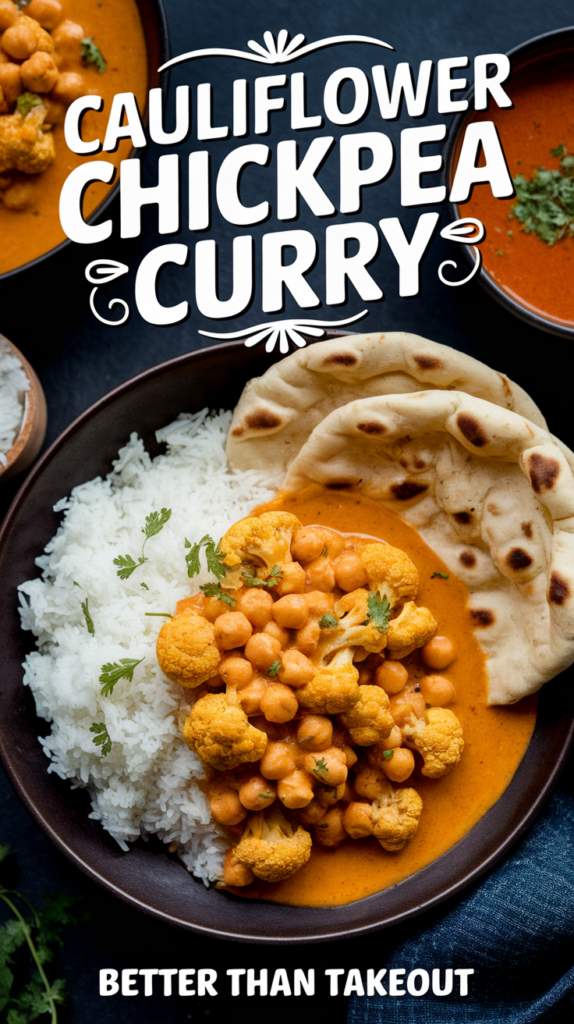
But this cauliflower chickpea curry? You’ll make it once and genuinely want it again three days later. Not because you’re being healthy. Because it’s that good.
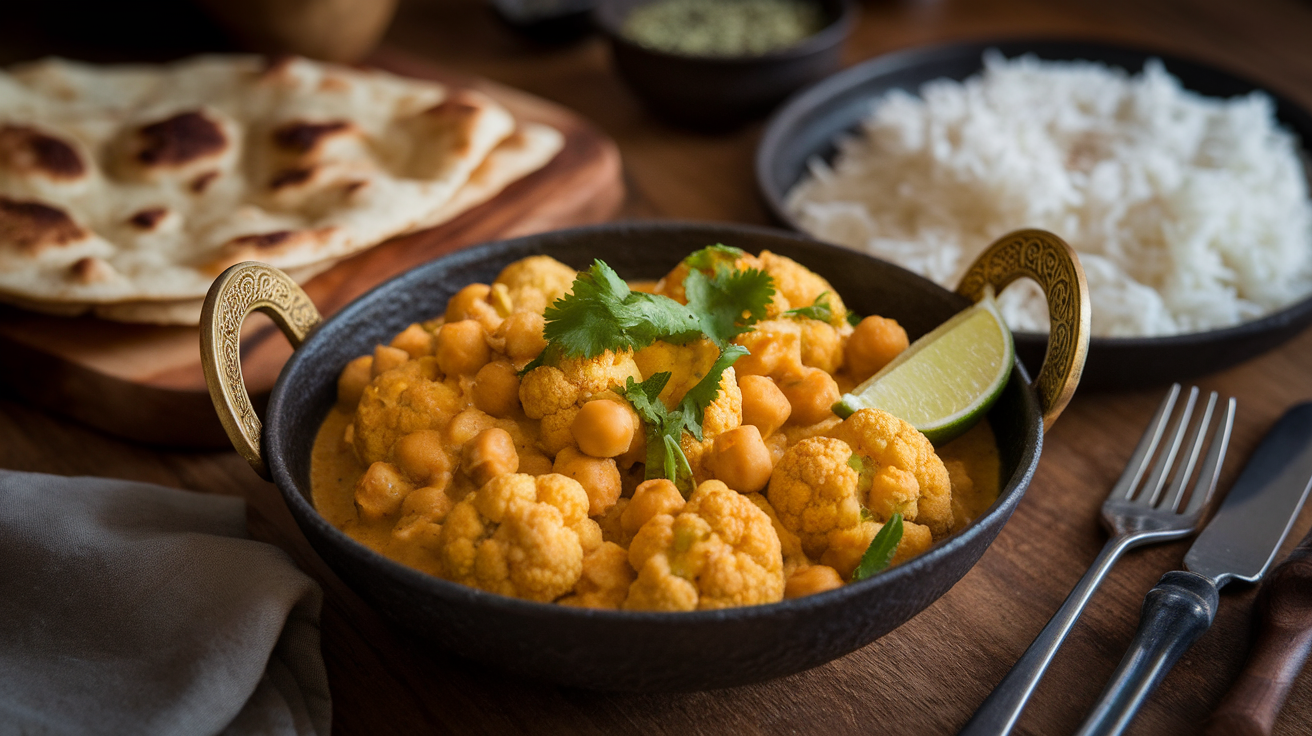
The sauce is rich and creamy without being the kind of heavy that makes you want to lie down afterward. The cauliflower goes soft and soaks up every bit of that spiced coconut base.
The chickpeas make it filling enough that you won’t spend the evening rummaging through the snack drawer. And it all comes together in one pot, which means fewer dishes to pretend you’ll do later.
Why This Cauliflower Chickpea Curry Works
Here’s the thing about spices, a lot of home cooks add them politely, like they’re worried about offending the curry powder. This recipe doesn’t do that.
Cumin, turmeric, smoked paprika, and fresh ginger all go in together and actually get toasted, which turns a decent pot of food into something that smells like you know what you’re doing.
The coconut milk rounds everything out. The chickpeas do the heavy lifting on protein. The cauliflower fills the pot without emptying your wallet.
You can make it fiery or mild depending on who’s at the table. And somehow it tastes even better the next day when you eat it straight from the container over the sink, which is technically a valid serving method.
What You’ll Need
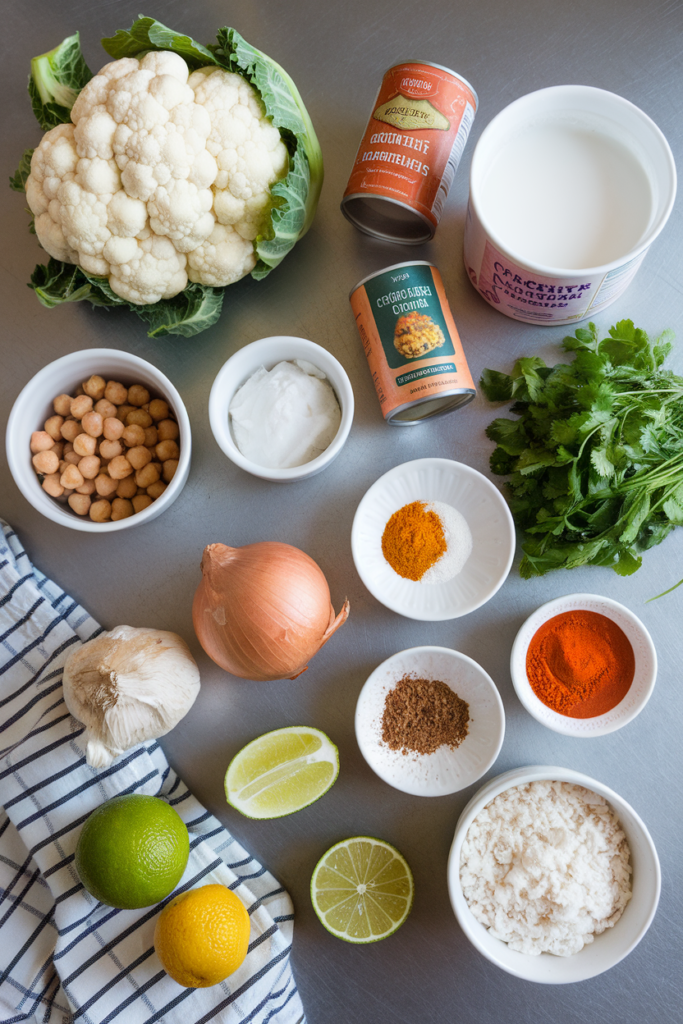
Grab one medium head of cauliflower and chop it into florets, not too big, not too small, just pieces that’ll actually fit on a spoon. Drain a can of chickpeas. That’s already half the prep done.
For the rest: a yellow onion, three garlic cloves, a thumb of fresh ginger, a can of crushed tomatoes, and a can of full-fat coconut milk. Full-fat. Don’t let “light” coconut milk anywhere near this pot.
Spice-wise you’ll need curry powder (start with a tablespoon, taste, and go from there), ground cumin, turmeric, and smoked paprika if you have it. Red pepper flakes or a fresh chili if you want heat. Neutral oil, salt, black pepper, and a squeeze of lemon or lime at the end. Fresh cilantro on top, rice or naan underneath.
How to Actually Make It
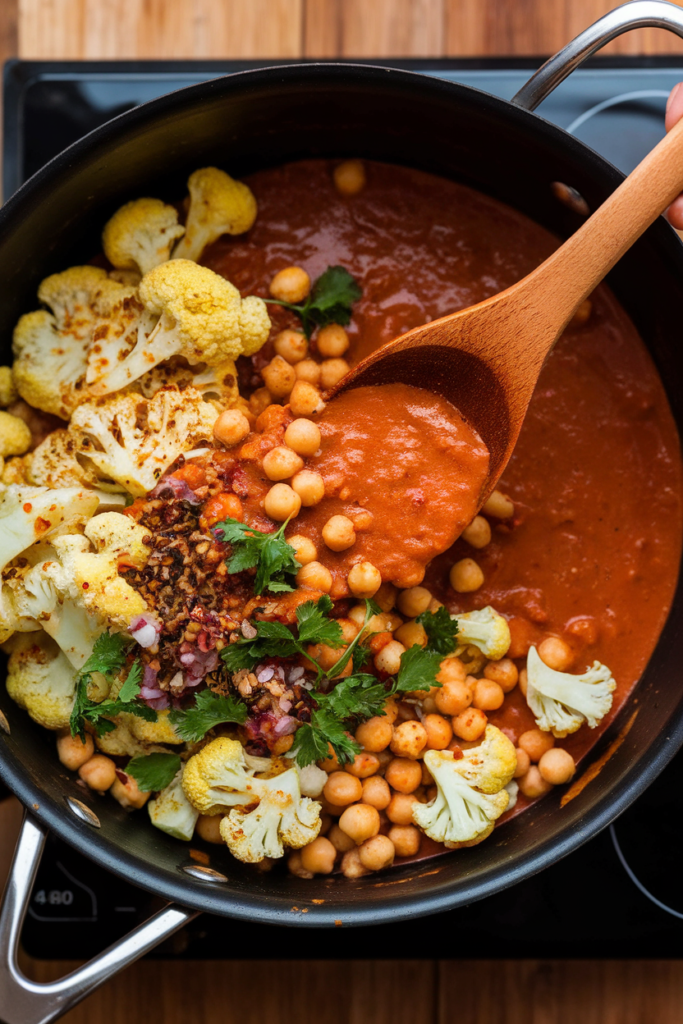
Start by getting your onion soft in a bit of oil, about five minutes over medium heat with a pinch of salt. When it’s golden and smelling sweet, add the garlic and ginger and give it a full minute. Your kitchen should start smelling good right about now.
Throw in all the spices at once. Stir them around for 30 to 45 seconds. They’ll go darker and fragrant, that’s exactly what you want. This is called blooming and it’s the difference between a curry that tastes like effort and one that tastes like an accident.
Pour in the crushed tomatoes and let the whole thing simmer and reduce for two or three minutes. Add the cauliflower and chickpeas, season properly with salt and pepper, then pour in the coconut milk. Bring it to a gentle simmer, drop the heat, cover it, and let it cook for 12 to 15 minutes until the cauliflower is tender but still holding its shape.
Taste it. If the tomatoes are too sharp, a tiny bit of maple syrup fixes it. Squeeze in your lemon or lime for brightness. More salt if it needs it. Let it sit off the heat for two minutes, the sauce thickens up nicely, then scatter cilantro over the top and serve.
The Part Where It’s Actually Good for You
Chickpeas pack fiber and plant-based protein, so this keeps you full without the mid-afternoon crash. Cauliflower brings vitamin C and a bunch of antioxidants while happily absorbing whatever sauce it’s swimming in.
Turmeric and ginger have anti-inflammatory properties. Coconut milk adds healthy fats that help your body actually use all the fat-soluble vitamins you just ate.
It’s also vegetarian, naturally gluten-free, and costs about the same as a sad desk salad — except it tastes like something you’d order at a restaurant and then describe in detail to someone who didn’t ask.
Things That Will Ruin It
Don’t skip the spice toasting step. Just don’t. Spices added straight to liquid without blooming taste flat and tired, and you deserve better than that.
Don’t overcook the cauliflower. Check it at 12 minutes. It should be tender with a bit of structure left, not mashed-potato soft.
Don’t go light on seasoning. Coconut milk is rich and mellow, it needs real salt and real acid to wake up. Taste, adjust, taste again.
And don’t use light coconut milk. It’s mentioned twice because it matters twice.
ALSO CHECKOUT – My Favorite Vegan Chickpea Curry Recipe!
Questions People Actually Ask
Can I swap the coconut milk? Yes — blend soaked cashews with water for a creamy alternative, or use plain yogurt stirred in off the heat so it doesn’t curdle.
How spicy is it? Mild to medium as written. Leave out the chili flakes for a gentle version, or add cayenne at the end if you like things with some personality.
Can I use frozen cauliflower? Absolutely. Add it straight from the freezer and give it an extra few minutes to cook through.
Can I make it in a slow cooker? Yes — sauté the aromatics and spices on the stove first, then transfer everything to the slow cooker. Four to five hours on low or two to three on high.
Can I make it ahead? This is almost the point. Make it Sunday, eat it Monday, be quietly smug about it both days.
The Short Version
This is the kind of recipe that earns a permanent spot in your rotation because it never disappoints.
It comes together fast, uses things you probably already have, and produces a pot of food that tastes like you spent more time on it than you did. Keep chickpeas and coconut milk in the pantry and you’re always 30 minutes away from a genuinely satisfying dinner.
Make a big batch. Eat it with rice, eat it with naan, eat it with a spoon directly from the pot if that’s where the evening takes you. No judgment here.
Ingredients
Method
- Prep the vegetables: Cut the cauliflower into small, even florets. Dice the onion, mince the garlic, and grate the ginger. Rinse and drain the chickpeas.
- Sauté the aromatics: Heat oil in a large pot over medium heat. Add the onion with a pinch of salt and cook 4–5 minutes until soft and lightly golden. Stir in garlic and ginger and cook 1 minute until fragrant.
- Bloom the spices: Add curry powder, cumin, turmeric, smoked paprika, and red pepper flakes (if using). Stir for 30–45 seconds to toast the spices. This step deepens flavor, so don’t skip it.
- Add tomatoes and simmer: Pour in the crushed tomatoes. Stir and let it bubble for 2–3 minutes to reduce slightly. If the sauce seems too thick, add a splash of water.
- Cook the cauliflower: Add the cauliflower florets and chickpeas. Season with 1 teaspoon salt and black pepper. Stir to coat everything in the sauce.
- Make it creamy: Pour in the coconut milk. Bring to a gentle simmer, then lower heat. Cover and cook 12–15 minutes, stirring occasionally, until cauliflower is tender but not mushy.
- Balance the flavors: Taste and adjust. Add the sugar or maple syrup if the tomatoes are sharp. Squeeze in lemon or lime juice for brightness. Add more salt and pepper as needed.
- Finish and serve: Remove from heat and let it sit 2 minutes to thicken. Garnish with chopped cilantro. Serve over rice or quinoa, or with warm naan.

Hello, I’m an athlete and a food lover who shares vegetarian recipes that are both delicious and nourishing. I enjoy creating salads, pastas, smoothies, and guilt-free desserts you can enjoy without stressing about calories.