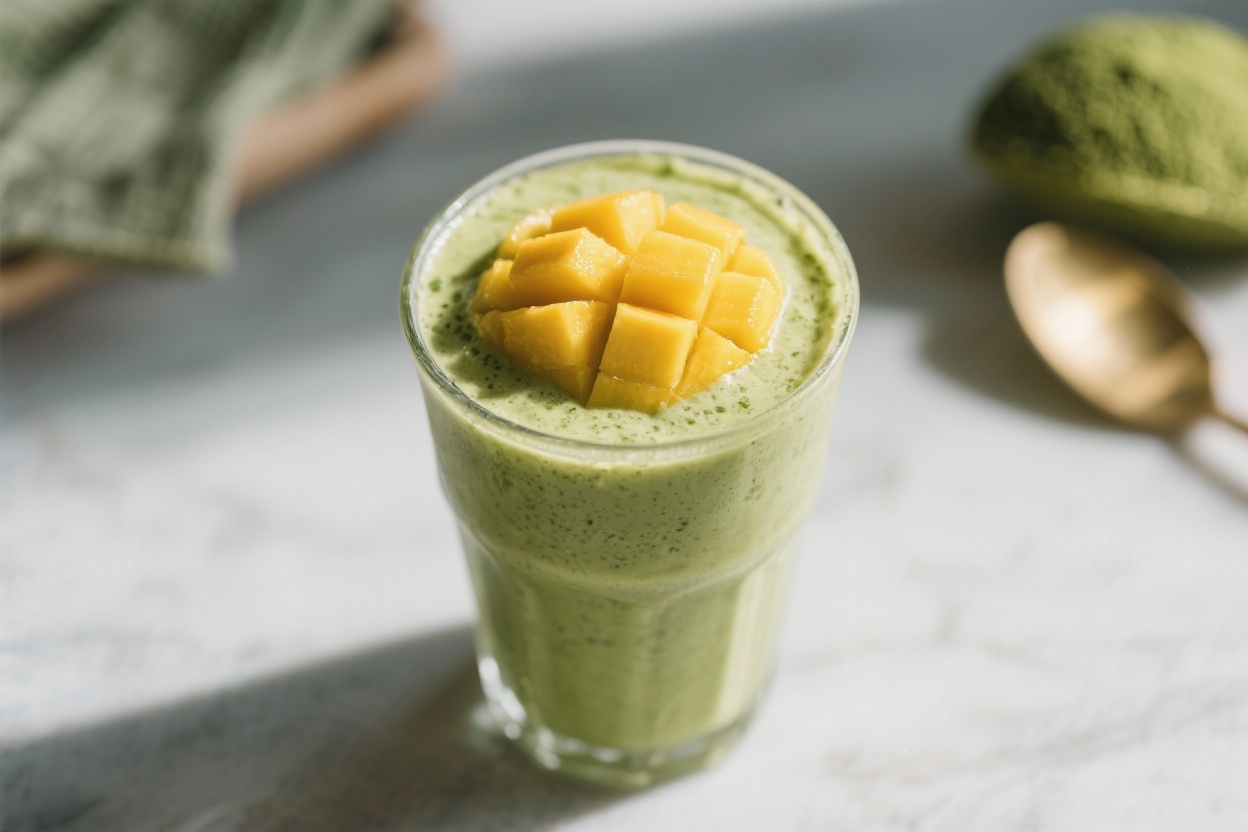
If you love smoothies that feel fresh and uplifting, this matcha mango smoothie will be your new favorite.
It blends sweet, juicy mango with earthy, tea-like matcha for a flavor that’s balanced and not too sugary.
The texture is creamy, the color is beautiful, and it actually gives you a gentle, sustained energy boost.
It’s quick to make, easy to customize, and works as breakfast, a post-workout drink, or a mid-afternoon pick-me-up.
What Makes This Matcha Mango Smoothie So Good
- Perfect flavor balance: Ripe mango adds natural sweetness and tropical flavor that pairs beautifully with the green, slightly grassy taste of matcha.
- Steady energy: Matcha contains caffeine plus L-theanine, which many people find delivers smooth focus without jitters.
- Creamy without heavy ingredients: A small amount of yogurt or banana creates a thick, milkshake-like texture without relying on ice cream or added sugar.
- Quick and flexible: It takes about five minutes and works with dairy or dairy-free options, fresh or frozen fruit, and your favorite add-ins.
- Nutrient-dense: You get antioxidants from matcha, vitamins A and C from mango, and fiber to keep you satisfied.
Shopping List
- Frozen mango chunks (about 1 to 1 1/2 cups) – frozen works best for frosty texture
- Matcha powder (1 to 2 teaspoons) – culinary or ceremonial grade
- Milk of choice (3/4 to 1 cup) – dairy, almond, oat, or coconut
- Plain or vanilla yogurt (1/4 cup) – dairy or coconut yogurt for creaminess
- Half a ripe banana – optional, for extra body and sweetness
- Honey or maple syrup (1 to 2 teaspoons) – optional, adjust to taste
- Ice (a handful) – optional if you’re using fresh mango
- Fresh lime or lemon – optional, a squeeze brightens the flavor
- Pinch of salt – optional, enhances sweetness and overall taste
Instructions
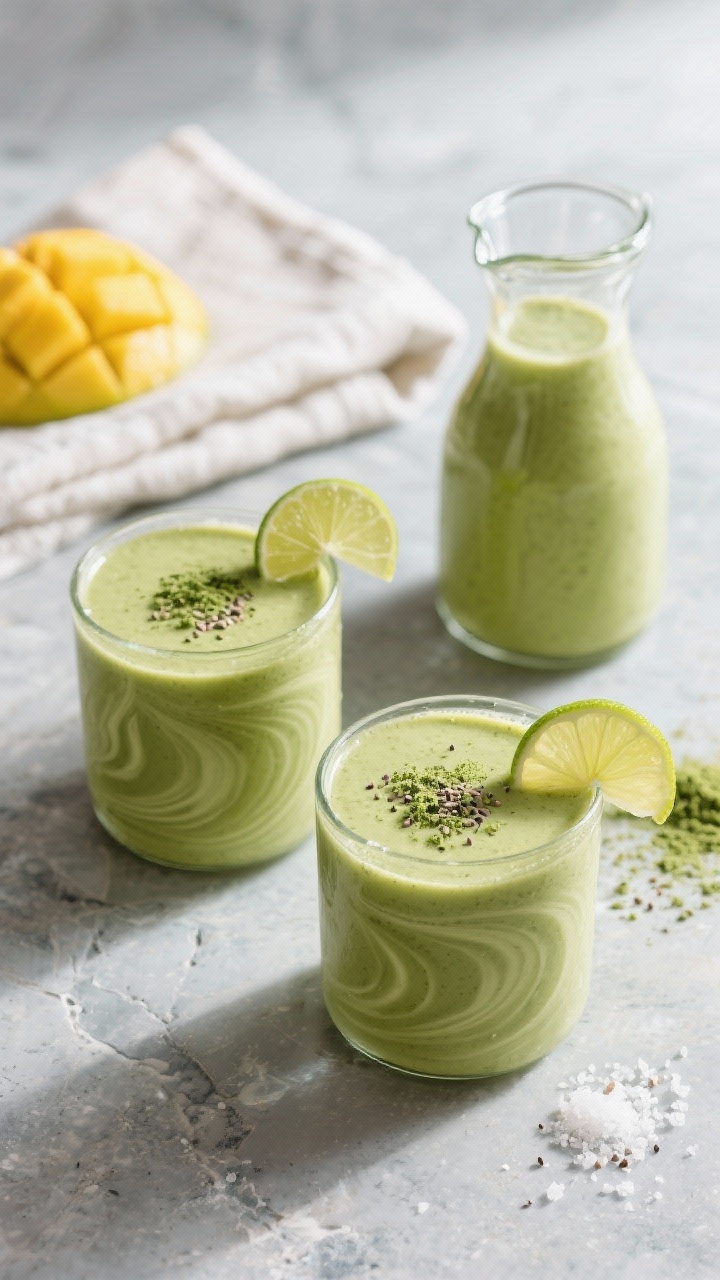
- Choose your base: Add milk to the blender first so the blades catch easily. Start with 3/4 cup; you can add more later to adjust thickness.
- Add the fruit: Toss in frozen mango and the half banana if using. Frozen mango gives you a thick, frosty smoothie without diluting the flavor.
- Blend in the creaminess: Add yogurt for a smooth, velvety finish.If skipping yogurt, use a splash more milk or a few cashews for body.
- Measure the matcha: Add 1 teaspoon for a gentler flavor or 2 teaspoons for a stronger, greener taste. Sift the matcha if it’s clumpy.
- Sweeten lightly: Add honey or maple syrup only if needed. Mango often provides enough sweetness on its own.
- Brighten and balance: Add a small squeeze of lime or lemon and a tiny pinch of salt.These make the flavors pop.
- Blend until smooth: Start on low, then move to high for 30–45 seconds. If it’s too thick, add a little more milk. If too thin, add a few more mango chunks or ice.
- Taste and adjust: Check sweetness and matcha strength.Add a bit more matcha for a deeper flavor or a touch more sweetener if needed.
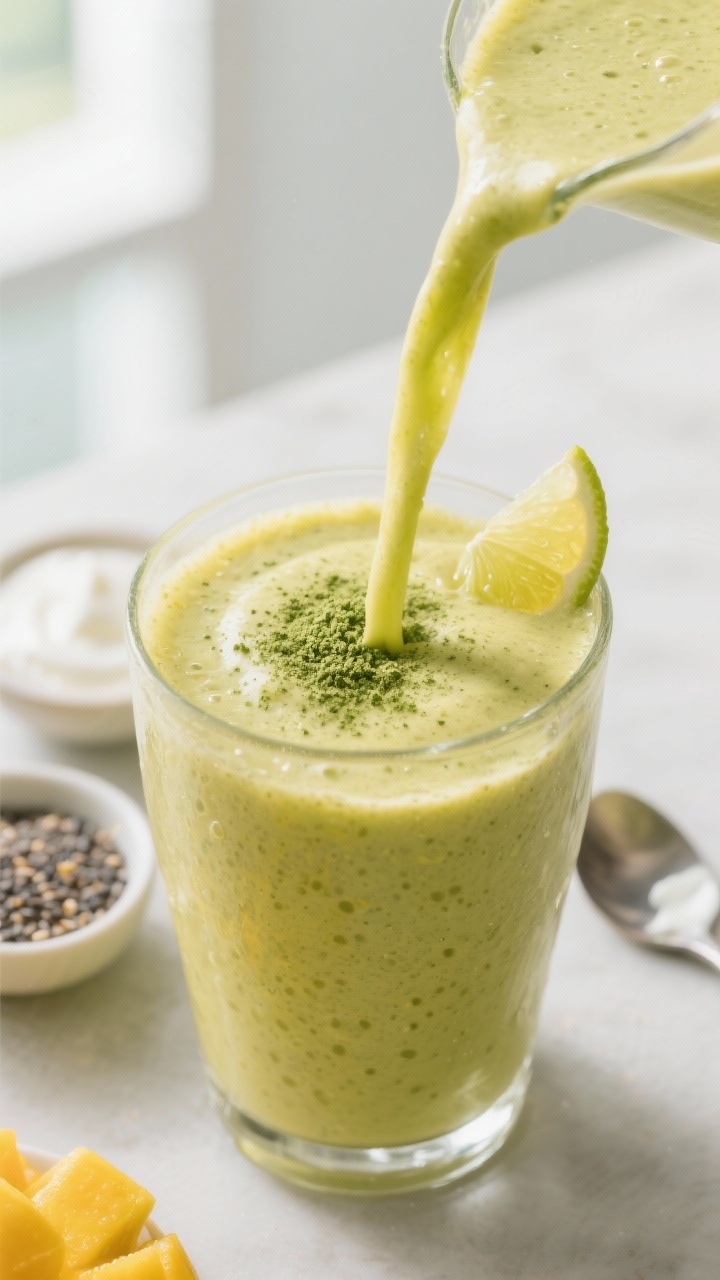
- Serve right away: Pour into a cold glass. For a little flair, dust the top with a pinch of matcha or add a few chia seeds.
How to Store
It’s best enjoyed fresh, but you can store it in an airtight jar in the fridge for up to 24 hours. Give it a good shake before drinking, as separation is normal.
For longer storage, pour into freezer-safe containers or ice cube trays and freeze for up to 2 months. Blend the frozen cubes with a splash of milk later for a quick, thick smoothie. If you plan to make it ahead, leave out the banana and add it right before blending to keep the flavor bright.
Health Benefits
- Antioxidants: Matcha is rich in catechins, especially EGCG, which supports cellular health.
- Gentle energy and focus: Matcha’s caffeine combined with L-theanine can promote alertness without the crash many people feel with coffee.
- Immune support: Mango is high in vitamin C and vitamin A, which support immune function and skin health.
- Digestive support: Fiber from mango and banana helps with digestion and steady energy.Yogurt adds probiotics if you choose a live-culture option.
- Hydration and electrolytes: Fruit and milk contribute fluids and small amounts of potassium and magnesium.
Common Mistakes to Avoid
- Using too much matcha: Overdoing it can make the smoothie bitter. Start with 1 teaspoon and build up.
- Skipping the sift: Matcha clumps easily. Sifting or whisking it with a splash of milk before blending helps.
- Adding too much ice: Ice can water down flavor.Rely on frozen mango for thickness and use ice sparingly.
- Not balancing acidity: A little citrus boosts brightness and keeps the smoothie from tasting flat.
- Choosing underripe mango: If using fresh mango, make sure it’s ripe for the best sweetness and texture.
Variations You Can Try
- Coconut Matcha Mango: Use full-fat coconut milk and top with toasted coconut flakes for a tropical, dessert-like treat.
- Protein Boost: Add a scoop of vanilla or unflavored protein powder. You may need an extra splash of milk to keep it smooth.
- Green Power: Blend in a handful of baby spinach or kale. The mango flavor will still dominate, and the color stays vibrant.
- Ginger-Lime Zing: Add 1/2 teaspoon grated fresh ginger and an extra squeeze of lime for a refreshing, bright kick.
- Overnight Smoothie: Soak chia seeds (1 tablespoon) in the milk for 10 minutes, then blend everything.Extra thick and satisfying.
- Low-Sugar Option: Skip the banana and sweetener, and rely solely on mango. If needed, add a few drops of liquid stevia.
- Iced Latte Twist: Replace half the milk with chilled green tea for a lighter, tea-forward flavor and fewer calories.
FAQ
What type of matcha should I use?
Ceremonial grade offers a smoother, naturally sweeter flavor, while culinary grade is stronger and works well in blended drinks. Either is fine; just make sure it’s fresh, bright green, and stored in an airtight container away from light and heat.
Can I make it without banana?
Yes.
Skip the banana and add extra mango or a couple of ice cubes. You can also add avocado or a spoonful of nut butter for creaminess without added sweetness.
Is it okay to drink this in the afternoon?
For most people, yes. Matcha has moderate caffeine, usually less than a cup of coffee.
If you’re sensitive to caffeine, enjoy it before early afternoon or choose a lower amount of matcha.
Can I use fresh mango instead of frozen?
Absolutely. If you use fresh mango, add a handful of ice to chill and thicken the smoothie, or freeze the mango pieces beforehand for the best texture.
How can I make it vegan?
Use a plant-based milk like almond, oat, or coconut, and swap yogurt for a dairy-free option. Sweeten with maple syrup or dates instead of honey if needed.
What if my smoothie is too bitter?
Use less matcha, add a little more mango or banana, and include a small squeeze of citrus.
A teaspoon of honey or maple syrup also helps balance bitterness.
Can kids have this Matcha Mango Smoothie?
Because it contains caffeine, consider making a no-matcha version for kids or using a very small amount. The mango-yogurt base is kid-friendly on its own.
In Conclusion
This matcha mango smoothie brings together bright fruit and smooth green tea for a drink that tastes great and makes you feel good.
It’s simple to build, easy to tweak, and fast enough for busy mornings.
Keep frozen mango on hand, choose a matcha you like, and you’ll have a refreshing, energizing blend whenever you want it.
One sip, and it might become your go-to green smoothie.

Hello, I’m an athlete and a food lover who shares vegetarian recipes that are both delicious and nourishing. I enjoy creating salads, pastas, smoothies, and guilt-free desserts you can enjoy without stressing about calories.