Hello there…
Some meals sit right in that sweet spot between comfort food and fresh seasonal cooking.
For me, veggie risotto is one of those meals.
It feels creamy and satisfying and the vegetables keep it light enough for warmer weather.
If you’ve ever made risotto before, you probably know the reputation it carries.
People say it’s complicated or time consuming.
Honestly, it’s not nearly as intimidating as it sounds.
Once you understand the basic rhythm of the dish, making spring risotto becomes surprisingly relaxing.
And if you enjoy cooking spring recipes that highlight seasonal vegetables, this dish deserves a place on your list.
So, let’s start making the super yum spring veggie risotto that you will have on loop this spring season.
Table of Contents
Why Spring Risotto Works So Well with Seasonal Vegetables
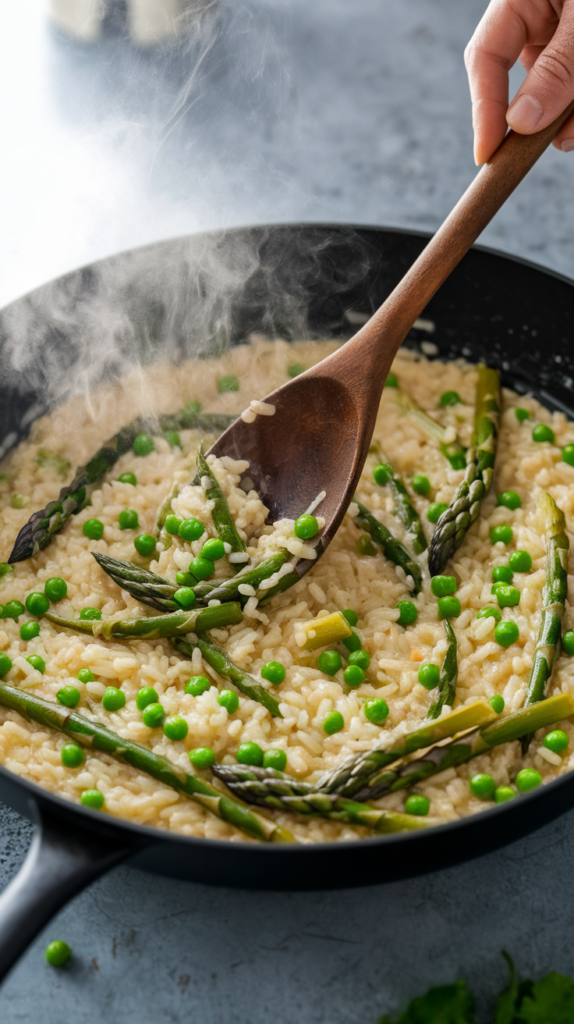
Spring vegetables naturally have a lighter, fresher flavor compared to winter produce.
That’s exactly why they work so well in a dish like spring risotto.
Classic risotto provides the creamy base. Seasonal vegetables add color, texture and brightness.
When those two elements come together, you get a dish that feels balanced rather than heavy.
Vegetables that work beautifully in spring recipes like this include:
- Asparagus
- Green peas
- Zucchini
- Spinach
- Fresh herbs
The result is a risotto that still feels comforting but also reflects the fresh energy of spring cooking.
The Ingredient That Brightens Spring Risotto
Many risotto recipes focus only on butter and cheese.
While those ingredients add richness, a small touch of acidity can make a huge difference.
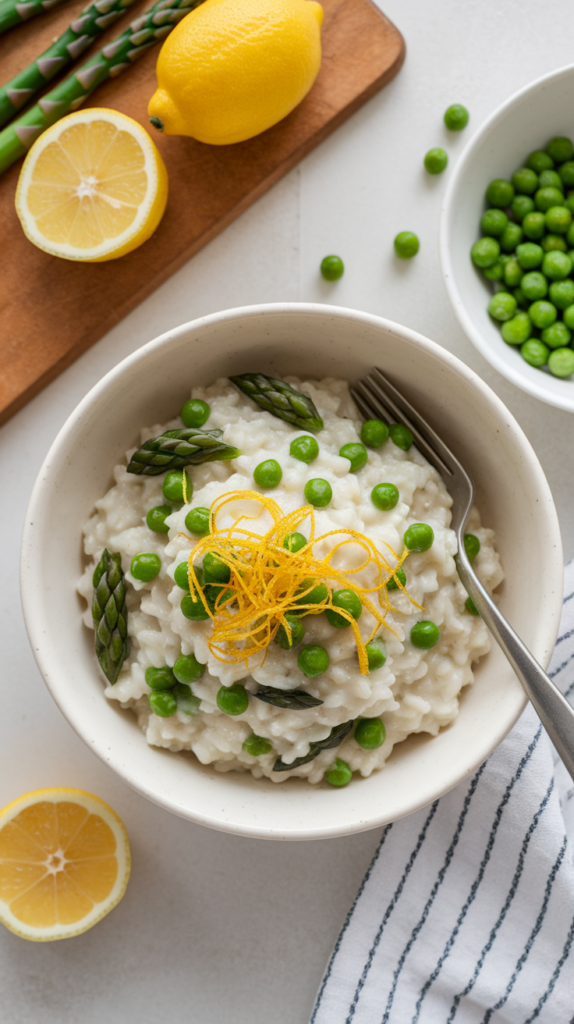
A little lemon zest added at the end of cooking can completely brighten the dish.
The citrus aroma complements vegetables like asparagus and peas beautifully.
It also prevents the risotto from tasting too heavy.
If you enjoy spring recipes that feel fresh and balanced, this small addition is worth trying.

Spring Veggie Risotto
Ingredients
Method
Warm the broth
Heat vegetable broth in a saucepan over low heat and keep it warm.Cook the aromatics
Heat olive oil and butter in a large pan over medium heat. Add onion and cook until soft. Add garlic and cook for 1 minute.Toast the rice
Add arborio rice and stir for about 2 minutes until slightly translucent.Add broth gradually
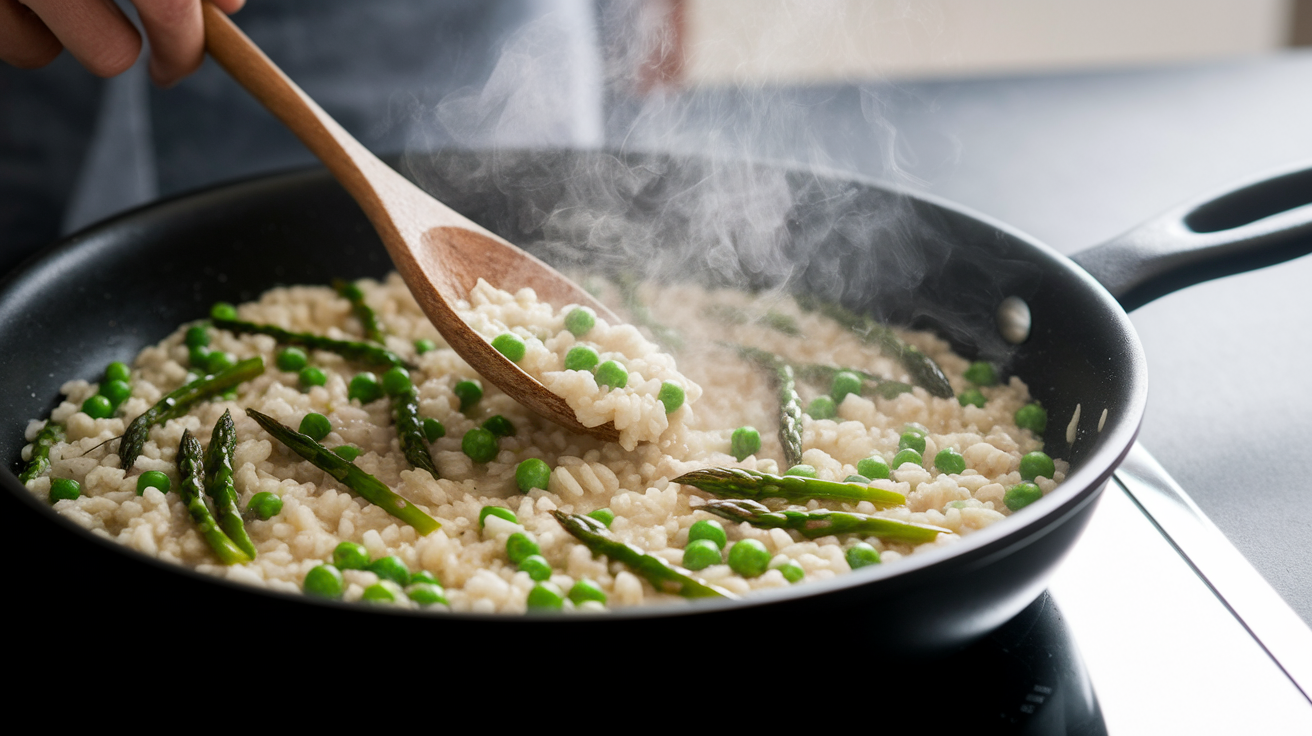
Add one ladle of warm broth and stir gently. Let it absorb before adding more. Repeat this process, stirring occasionally.Add vegetables
When the rice is halfway cooked, add asparagus, peas, and zucchini. Continue adding broth and stirring until the rice is tender and creamy.Finish the risotto
Stir in parmesan cheese, salt, and black pepper. Add fresh herbs or lemon zest if using. Serve immediately.
Notes
- Don’t rush the broth step. Adding it slowly is what gives risotto that creamy texture.
- Keep the broth warm. Cold broth messes with the cooking process and slows everything down.
- Don’t overcook the vegetables. You want them slightly fresh, not mushy.
- Stir occasionally, not constantly. You’re not trying to babysit the pan every second.
- Add lemon zest at the end if you want that fresh spring flavor to stand out more.
Choosing the Right Rice for Risotto
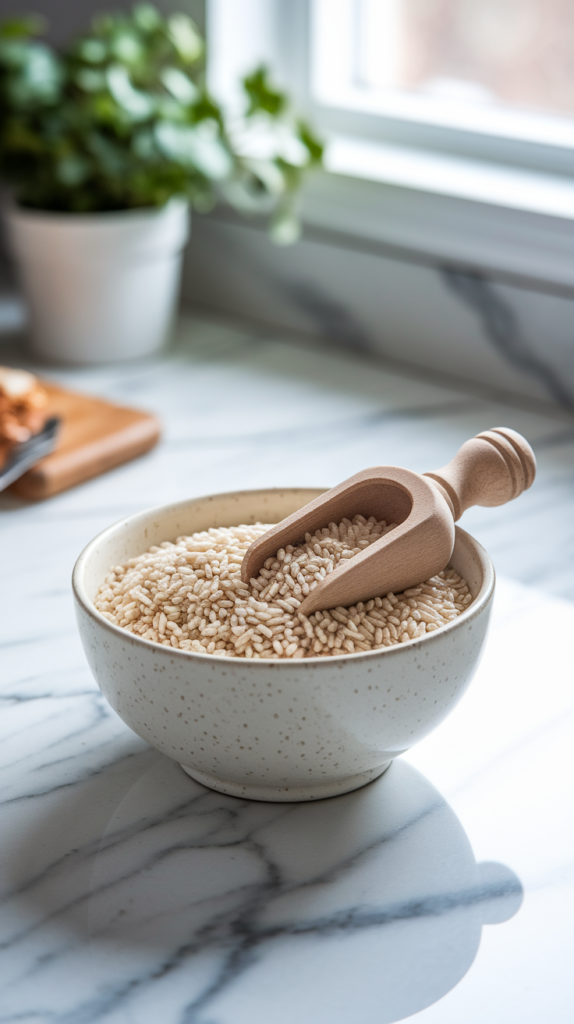
Not all rice works well in risotto, and this is where many beginners run into trouble.
Arborio rice is the most common choice because it contains a high amount of starch.
That starch is what creates the creamy texture without needing heavy cream.
Other rice varieties like basmati or jasmine won’t produce the same result.
So if you want a proper spring risotto, choosing the correct rice really matters.
Easy Variations for Spring Risotto
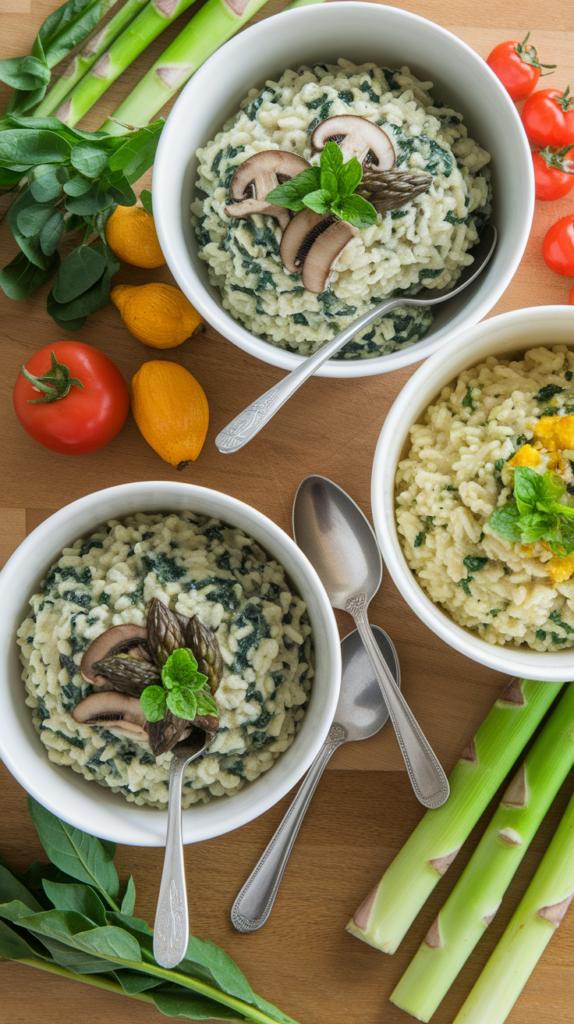
Once you learn the base recipe, you can easily customize your spring risotto depending on what vegetables you have available.
Here are a few variations to try.
Spinach and Pea Risotto
Add fresh spinach during the last few minutes of cooking for extra greens.
Mushroom and Asparagus Risotto
Sauté mushrooms separately and mix them into the risotto near the end.
Lemon Herb Risotto
Add lemon zest and fresh herbs like basil or parsley for a bright flavor.
Small changes like these help keep spring recipes interesting throughout the season.
What to Serve with Spring Veggie Risotto
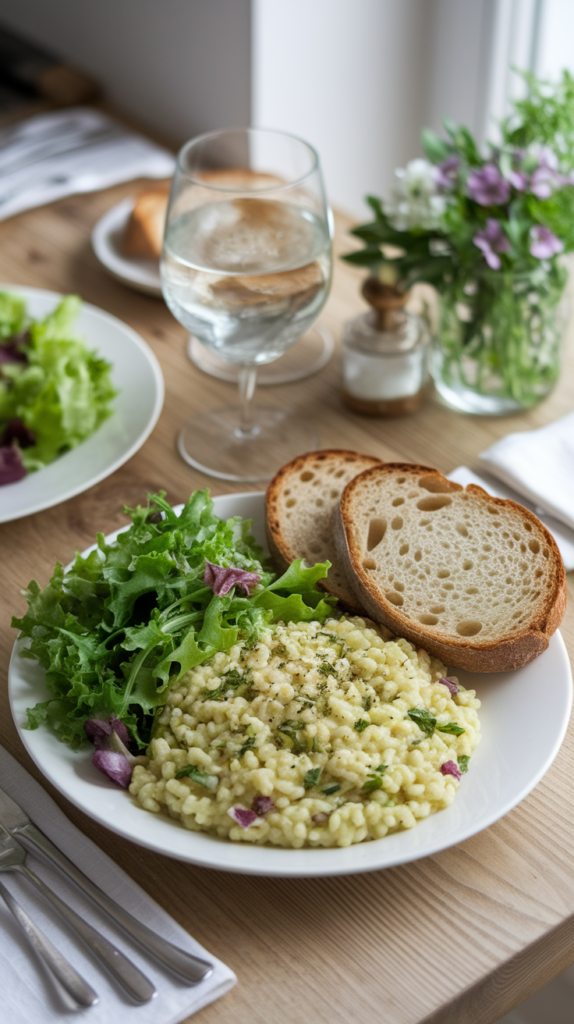
This dish can work as a main meal or a side dish depending on how you serve it.
Some great pairings include:
- Garlic roasted vegetables
- Fresh green salads
- Toasted sourdough bread
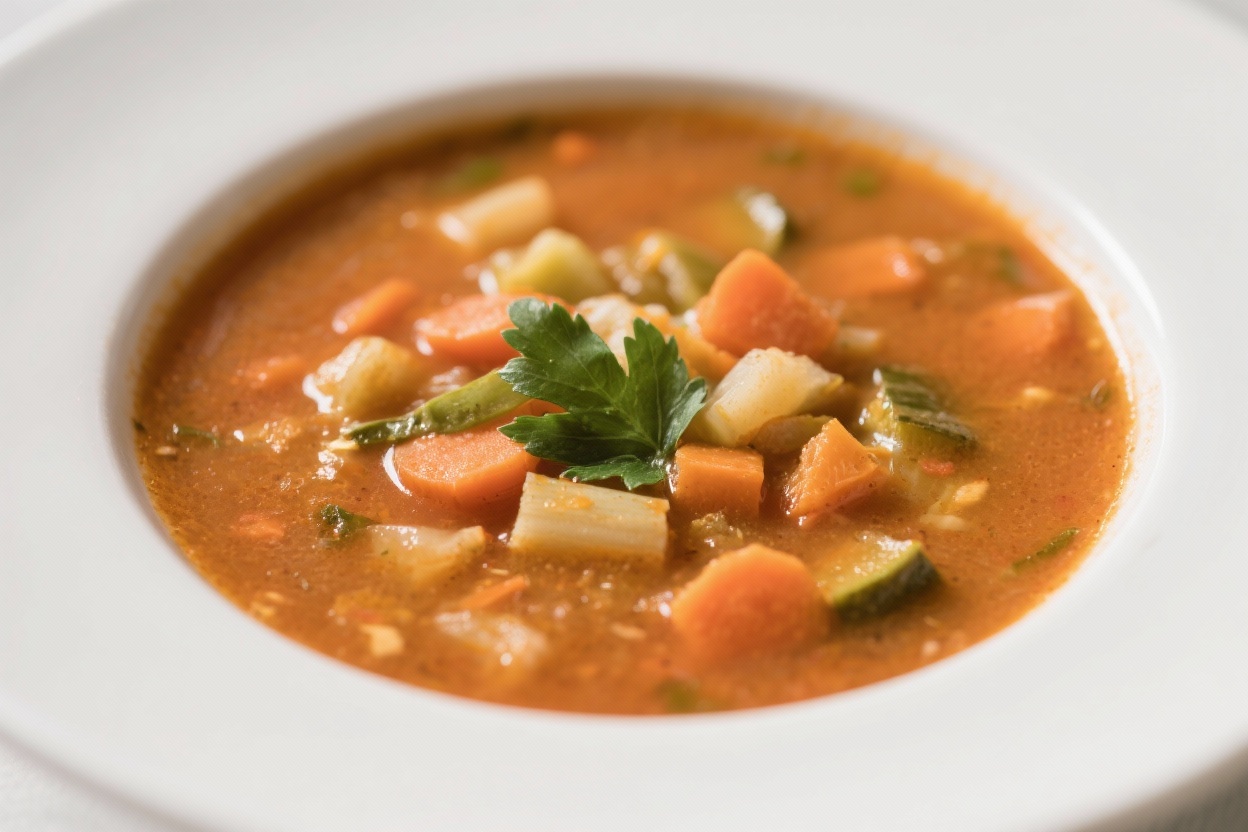
- Light vegetable soups
I often serve spring risotto with a simple salad because the freshness balances the creamy rice perfectly.
Why Spring Risotto Is Worth Making
Some recipes become favorites because they strike the right balance between comfort and freshness.
That’s exactly what spring risotto does.
It delivers the creamy texture people love while still highlighting seasonal vegetables.
The cooking process also feels surprisingly calming once you get used to it.
If you enjoy cooking spring recipes that celebrate fresh ingredients, this risotto definitely deserves a spot in your kitchen rotation.
FAQ
1. Can I make spring risotto without parmesan cheese?
Yes. You can skip the parmesan or replace it with nutritional yeast for a dairy-free option.
2. How do I know when risotto is done?
The rice should feel tender but slightly firm in the center. The texture should also look creamy rather than dry.
3. Can I store leftover risotto?
Yes. Store leftover spring risotto in an airtight container in the refrigerator for up to two days.
4. How do I reheat risotto?
Add a small splash of vegetable broth or water while reheating on the stove. This helps restore the creamy texture.
5. Can I add other vegetables to spring risotto?
Absolutely. Vegetables like spinach, mushrooms, bell peppers and zucchini work well in many spring recipes including risotto.
Hello, I’m an athlete and a food lover who shares vegetarian recipes that are both delicious and nourishing. I enjoy creating salads, pastas, smoothies, and guilt-free desserts you can enjoy without stressing about calories.